Appendix P – ABD Content Outline
Text from this document (searchable)
Page 1
ABD
DERMATOLOGY
ABD CeRtifICatION PATHWAY
CORE Exam StudY GuIde
The CORE modules build upon the knowledge and abilities tested in the BASIC exam. Some material
in the BASIC content outline may also be covered in the CORE modules.
Presented herein are examples of the types of content that may appear in the CORE modules. These
lists are intended to be helpful as a study guide; however, they are not intended to be exhaustive or
all-inclusive. There may be subjects covered in the exams that are not included in the study guide.
Conversely, not every subject in the study guide may appear on a given exam.
Diagnoses covered in the CORE exams include both common and uncommon conditions, with an
emphasis on conditions that are clinically of higher importance to recognize and manage. The
range of diagnoses corresponds roughly to that covered in standard textbooks.
Although the content is separated into distinct clinical areas of medicine, pediatrics, pathology, and
surgery, there is necessarily some overlap. There may be questions requiring the integration of
knowledge from two or more of these areas. Also, the absence of a subject from a specific clinical
section of the guide should not be taken to imply that the subject is irrelevant to that clinical field.
For example, the ability to interpret statistical tests appears in the Medical Dermatology section;
however, it is equally relevant to the three other clinical fields.
Finally, exam content may change as the field of dermatology changes. This and any study
guide or content outline should be considered working drafts that may periodically be updated.
Prepared April 16, 2018
Page 2
ABD
DERMATOLOGY
ABD CERTIFICATION PATHWAY
CORE ExAM STUDY GUIDE
CORE Medical Dermatology
Examples of Content
• Identify the most likely diagnosis from a digital image or written description of skin lesions.
• Identify the most likely diagnosis by correlating cutaneous findings with history, histopathology.
and/or laboratory results.
• Identify the most likely diagnosis based on dermoscopic findings.
• Formulate and prioritize a reasonable differential diagnosis for a given presentation.
• Describe direct and indirect immunofluorescent findings of specific conditions.
• Recognize the range of normal findings in the skin.
• Describe the different types of mucocutaneous findings that may occur in a given condition.
• Identify associated internal / systemic conditions.
• Identify epidemiologic features such as typical age of onset, gender, and geographic
associations.
• Describe how the clinical findings change as the disease evolves.
• Given the clinical presentation, select the most likely underlying cause (e.g., medication,
infectious organism).
• Describe the natural history of the condition.
• Identify exacerbating and alleviating factors, and factors associated with prognosis.
• Identify the most likely causes of morbidity and mortality.
• Describe consensus diagnostic, classification, and staging criteria.
• Choose an appropriate diagnostic work-up.
• Properly interpret test results.
• Choose an appropriate treatment / management strategy.
• Describe the proper use and monitoring of medications.
• Describe risks and complications associated with therapy, especially common side effects and
rare but dangerous side effects.
• Properly manage complications.
• Identify appropriate codes for evaluation and management and medical procedures.
• Describe the fundamental pathophysiology of medical dermatology diseases, including
cellular and molecular effectors of disease and cellular and molecular targets.
• Identify the mechanisms of action of drugs used in medical dermatology.
• Describe proper applications and interpretations of statistical tests, and critically evaluate
clinical research.
• Describe the fundamental principles of photobiology related to medical dermatology disease
pathogenesis, diagnosis, or therapy.
2
Prepared April 16, 2018
Page 3
DERMATOLOGY
ABD CERTIFICATION PATHWAY
CORE ExAM STUDY GUIDE
CORE Pediatric Dermatology
Examples of Content
• Identify the most likely diagnosis from a digital image or written description of skin lesions.
• Identify the most likely diagnosis by correlating cutaneous findings with history, histopathology.
and/or laboratory results.
• Identify the most likely diagnosis based on dermoscopic findings.
• Formulate and prioritize a reasonable differential diagnosis for a given presentation.
• Recognize the range of normal findings in the skin from infancy through adolescence.
• Describe the different types of mucocutaneous findings that may occur in a given condition.
• Identify associated internal/ systemic conditions most relevant to pediatric presentations of
skin disease.
• Identify epidemiologic features such as typical age of onset, gender, and geographic
associations.
• Describe the evolution of disease, including which findings may be expected at a given age
of the patient.
• Given the clinical presentation, select the most likely underlying cause (e.g., medication,
infectious organism.
• Describe the natural history of the condition.
• Identify exacerbating and alleviating factors, and factors associated with prognosis.
• Identify the most likely causes of morbidity and mortality.
• Choose an appropriate diagnostic work-up.
• Interpret test results, including skin scrapings and hair mounts.
• Choose an appropriate treatment / management strategy.
• Describe the proper use and monitoring of medications in infants and children, including
weight-based dosing.
• Identify the mechanisms of action of drugs used in pediatric dermatology.
• Describe risks and complications associated with therapy, especially common side effects and
rare but dangerous side effects.
• Properly manage complications.
• Describe the fundamental principles of embryology and skin development, with an emphasis
on circumstances where errors in development lead to cutaneous anomalies.
• Describe the fundamental principles of the genetic basis of inherited skin disease in those
circumstances where knowing the genetic defect and/or affected protein clarifies the
pathogenesis, diagnosis, or therapy of the disease.
Prepared April 16, 2018
Page 4
ABI
DERMATOLOGY
ABD CERTIFICATION PATHWAY
CORE EXAM STUDY GUIDE
CORE Surgical Dermatology
Examples of Content
• Describe the purposes of various types of suture techniques, complex closures, flaps, and
grafts.
• Determine the optimal types) of closure for a given surgical defect.
• Be able to determine the type of closure used by looking at the completed repair.
• When shown the initial surgical defect and the closure or closure in progress, identify where
Tissue pre-closure has been moved to effect the repair.
• Identify where to place the key suture (s) in tissue transpositions.
• Describe reasonable expected outcomes of wounds closed with various techniques.
• Identify indications for various types of wound dressings.
• Describe common complications of surgical procedures and measures to prevent them or
minimize their probability.
• When shown a surgical complication, be able to determine its probable cause and how it
might have been prevented.
• Properly manage common surgical complications.
• Properly manage safety threats such as needle sticks, splashes with bodily fluids, and broken
glass, and describe measures to minimize the probability of their occurrence.
• Identify, name, and describe the functions of anatomic structures relevant to surgical
dermatology, particularly on the head and neck.
• Be able to distinguish high-risk from lower-risk tumors.
• Diagnose lesions accurately using dermoscopy.
• Choose appropriate diagnostic tests.
• Choose appropriate management options for benign and malignant lesions, to include
medical as well as surgical options and observation or no treatment, when appropriate.
• Describe indications, benefits, risks, and efficacy of non-surgical treatments of skin cancers.
• Describe guidelines relevant to surgical dermatology, for example, Mohs micrographic surgery
appropriate use criteria and NCCN cancer management guidelines.
• Distinguish cancer from benign findings in Mohs sections.
• Identify indications, risks, benefits, and reasonable expected outcomes for commonly used
cosmetic procedures, including soft tissue fillers, sclerotherapy, liposuction, lasers, non-laser
light sources, botulinum toxin, dermabrasion, and chemical peels.
• Describe the basics of how common cosmetic procedures are performed.
• Identify common complications of cosmetic procedures and measures to prevent them or
minimize their probability.
• Describe the chronology of post-procedural wound healing and its effect on management
choices, for example, scar revision.
• Choose appropriate codes for procedures and for evaluation and management.
• Describe the fundamental principles of the science underlying surgical dermatology, to
include carcinogenesis, wound healing, laser physics, photoaging, and mechanisms of action
of medications used in surgical dermatology.
Prepared April 16, 2018
Page 5
DERMATOLOGY
ABD CeRtifICatION PATHWAY
CORE EXAM STUDY GUIDE
CORE Dermatopathology
Examples of Content
• Make an accurate diagnosis based on visual examination of histologic sections, to include
specimens prepared using H&E, special stains, immunoperoxidase, and immunofluorescence.
• Describe in words the histologic findings and make an accurate diagnosis based on a written
description of histology.
• Identify the clinical correlate of the histologic findings: e.g., how the lesions appear grossly,
how the condition presents.
• Be able to make an accurate diagnosis through correlation of the histologic and the clinical
findings.
• Recognize which special histologic studies (e.g., stains, immunopathology) may be helpful in
diagnosis.
• Distinguish similar conditions based on histology and/or staining patterns.
• Recognize normal anatomy, including anatomy associated with specific regions of the body.
• Formulate a differential diagnosis for characteristic histologic findings, for example,
acantholysis, eosinophilic spongiosis, necrobiosis.
• Describe how histologic findings change during the clinical evolution of the condition.
• Be able to make accurate diagnoses when examining immunofluorescent biopsies, KOH
preps, hair mounts, and oil preps.
• Describe the technological basis and practical applications of molecular tests used for
dermatopathology diagnosis.
• Identify the cellular and molecular basis of pathognomonic histologic findings, for example,
colloid bodies.
Prepared April 16, 2018
Page 6
ABD
SHELLA SUCCE
DERMATOLOGY
APPLIED EXAMINATION
OVERVIEW
The APPLIED Examination tests application of knowledge organized around the assessment of specific
skills. Both common and uncommon conditions are included on the exam, with emphasis given to
conditions that are relatively more important, either because they are common or because they
have significant associated morbidity or mortality.
For examples of the knowledge base upon which the APPLIED Exam builds, please refer to the Core
Exam Study Guide. For examples of APPLIED Exam questions, please refer to the Sample Items on
the ABD website.
Acquire knowledge base
- Prioritize appropriately which knowledge is essential to be able to recall.
- Evaluate the medical literature in an objective, scientific manner.
Assess the physical findings - Distinguish primary lesions from secondary changes, and physiologic from pathologic findings.
- Accurately diagnose skin lesions and eruptions based on morphology, color, and distribution,
and on dermoscopy when appropriate.
Generate a realistic differential diagnosis - Assign realistic probabilities to entities in the differential diagnosis, taking into account the
patient’s age, comorbidities, and environmental and hereditary factors. - Consider uncommon conditions, particularly potentially life-threatening conditions. Know
when it is important to perform testing for an uncommon condition, even if it is not the most
likely diagnosis.
Obtain additional information, if necessary - Obtain a directed history to narrow the differential diagnosis.
- Select and interpret appropriate laboratory tests, imaging studies, and other types of
evaluations. Take into account the characteristics of an individual patient and the relative
costs and efficacy of laboratory tests, imaging and other evaluations. - Determine when to perform a skin biopsy, choosing the optimal site, type, and clinical setting.
- Utilize additional sources of information appropriately.
Determine the most likely diagnosis - Interpret skin biopsy findings.
a. Correlate the clinical with the histologic findings.
b. Recognize when the histologic findings are not specific and form an appropriate plan
for diagnosis and/or management.
c. Recognize when the histologic findings are discordant with the clinical findings and
form an appropriate plan for diagnosis and/or management.
d. Know when additional testing, such as immunohistologic stains, are appropriate and
cost-effective in a given situation.
e. Know when to request a second opinion about the histologic diagnosis. - Integrate history, findings, and laboratory data to namrow the differential diagnosis.
Note: This document may be updated periodically.
Draft Updated: April 3, 2019
Page 7
ABD
AMERICAN BOARD OF
DERMATOLOGY
APPLIED EXAMINATION
OVERVIEW
Form a management plan
- Determine urgency of treatment and triage appropriately.
- Recognize when referral or second opinion is indicated.
- Develop management plan in the context of the patient and the health care system. Take
into account the individual characteristics of the patient, including age, patient preference,
ability to comprehend and communicate, culture, psychosocial factors, comorbidities,
logistical issues, family and caregiver concerns, prognosis, financial considerations, and
healthcare system.
Initiate management in the absence of a definitive diagnosis, when appropriate.
Choose appropriate procedures. - Perform procedures effectively and safely.
- Communicate management plan clearly to other care providers.
Communicate with and educate the patient - Recognize and provide appropriate education clearly to the patient and/or their proxy about
their condition’s etiology, natural history, associations, and exacerbating factors. - Involve the patient in decision-making. Understand issues related to consent for special
populations such as children. - Articulate clearly the risks and benefits of management choices.
- Know how to manage difficult patients and difficult situations.
- Practice in an ethical and compassionate manner.
Evaluate effectiveness of the management plan - Determine appropriate need and interval for follow up care.
- Monitor therapy appropriately.
- Know when to modify the management plan.
- Reassess diagnosis when necessary.
Manage complications of therapy - Recognize and manage side effects and complications of medical therapy.
- Recognize and manage side effects and complications of surgical therapy.
- Recognize and respond to emergency situations.
Oversee environment of care - Apply principles of quality and safety in clinical practice. Maintain a safe environment of
care. - Practice ethical principles of coding and billing.
- Comply with requirements of relevant regulatory authorities. Know when patient or family
requests are overridden by other considerations, such as government statutes.
Note: This document may be updated periodically.
Draft Updated: April 3, 2019
Page 8
ABD
DERMATOLOGY
BASIC, CORE, AND APPLIED ExAMINATIONs
CONTENT OVERVIEW
The descriptions below are general guidelines about content that may be evaluated in the ABD examinations.
Content overlap among stages (BASIC v. CORE v. APPLIED) and specialty areas (e.g., medical v. surgical) is to
be expected.
In general, the BASIC exam assesses knowledge base and application of knowledge at a level expected of a
first-year dermatology resident; the CORE assesses more advanced knowledge base and visual diagnosis; and
the APPLIED emphasizes application of knowledge.
MEDICAL DERMATOLOGY
First-year resident level: BASIC exam
• Diagnose dermatologic conditions based on physical examination (visual recognition), from a list of
approximately 100 diagnoses.
• Distinguish primary lesions from secondary changes.
• Integrate history and physical examination to diagnose common dermatologic conditions.
Construct a realistic differential diagnosis.
• Know the fundamental pathophysiology, exacerbating factors, and associations of common skin
conditions.
• Construct an appropriate initial workup and interpret test results for common conditions.
• Construct an initial management plan for uncomplicated conditions.
• Modify management plan, depending on response to therapy.
• Know the adverse effects and proper use and monitoring of commonly used topical and systemic
agents.
• Communicate effectively and practice in an ethical manner.
Senior resident level: CORE exam
• Diagnose common and uncommon dermatologic conditions based on physical examination (visual
recognition).
•Know the tundamental pathophysiology, initiating and exacerbating factors, and associations of
common and uncommon dermatologic conditions.
• Choose an appropriate workup for common and uncommon skin conditions.
• Know indications, strengins, and limitations of laboratory and imaging studies used in the evaluation of
dermatologic patients.
•
Know recommended treatments for common and uncommon skin conditions.
Know the adverse effects and proper use and monitoring of topical and systemic agents used in
dermatology.
Independent practice level: APPLIED exam
• Choose an appropriate diagnostic evaluation, taking into account the unique characteristics of an
individual patient and the relative costs and efficacy of laboratory tests and imaging studies.
• Select an appropriate management plan, taking into account the unique characteristics of an
individual patient, including patient preference, ability to comprehend and communicate, culture,
comorbidities, logistical issues, family and caregiver concerns, prognosis, financial considerations, and
healthcare system.
Recognize when a patient presents with a very unusual or rare condition, and know how to approach
the workup.
Recognize when second opinion and/or referral are indicated.
• Recognize and manage side effects and complications.
Disclaimer: This document is considered a DRAFT and further revisions are expected as the ABD Certification Pathway evolves.
Draft Compiled: July 5, 2017
Page 9
ABD
AMERICAN BOARD OF
DERMATOLOGY
BASIC, CORE, AND APPLIED ExAMINATIONS
CONTENT OVErVIEW
Recognize when urgent or emergent treatment is indicated and triage appropriately.
Manage difficult patients and difficult situations effectively.
Maintain a safe environment of care, comply with regulatory agency requirements, and ensure that all
members of the team understand safety and compliance issues.
EXAMPLES OF CONTENT
BASIC Exam
• Which of the following is the most appropriate treatment for a patient with mild to moderate
comedonal acne?
• Which of the following is the most common side effect of oral isotretinoin?
CORE Exam
• Which of the following antibiotics is most likely to interfere with the efficacy of oral contraceptives?
• Which of the following chemotherapeutic agents is most likely to cause an acneiform eruption?
APPLIED Exam
• A 20-year-old man who has been on oral isotretinoin for one month now has a serum triglyceride level of
350. What action should be taken?
• A 25-year-old woman has inflammatory and scaring acne that is poorly responsive to topical therapy
and oral antibiotics. She has been on oral contraceptives for several years because of irregular menses.
Her BMI is 34. She has no evidence of hirsutism. What further diagnostic evaluation, if any, should she
receive?
PEDIATRIC DERMATOLOGY
First-year resident level: BASIC exam
• Recognize characteristic pediatric presentations of skin disease.
• Develop appropriate plans for evaluation and basic management of common pediatric conditions.
Recognize skin conditions that characteristically present during the neonatal period or infancy.
• Develop appropriate plans for evaluation and management of common conditions of neonates and
infants.
• Choose age-and developmentally-appropriate treatments for common conditions.
• Provide appropriate education to patients and their families on the natural history and management of
common pediatric conditions.
• Consider patient age at disease onset when developing a differential diagnosis of common and less
common pediatric skin conditions.
Senior resident level: CORE exam
Recognize less common skin diseases presenting in pediatric patients.
• Choose an appropriate workup for common and uncommon skin conditions.
• Know indications, strengths, and limitations of laboratory and imaging studies.
• Know the adverse effects and proper use and monitoring of topical and systemic agents used in
pediatric dermatology.
Disclaimer: This document is considered a DRAFT and further revisions are expected as the ABD Certification Pathway evolves.
Draft Compiled: July 5, 2017
Page 10
ABD
AMERICAN BOARD OF
DERMATOLOGY
BASIC, CORE, AND APPLIED EXAMINATIONS
CONTENT OVERVIEW
Independent practice level: APPLIED exam
• Choose an appropriate diagnostic evaluation, taking into account the unique characteristics of an
individual patient and the relative costs and efficacy of laboratory tests and imaging studies.
• Select an appropriate management plan, taking into account the unique characteristics of an
individual patient, including patient preference, ability to comprehend and communicate, culture,
comorbidities, logistical issues, family and caregiver concerns, prognosis, financial considerations, and
healthcare system.
• Recognize when a patient presents with a very unusual or rare condition, and know how to approach
the workup.
Recognize when second opinion and/or referral are indicated.
Recognize and manage side effects and complications.
• Recognize urgent or emergent situations and triage appropriately.
• Manage difficult patients and difficult situations effectively.
• Maintain a safe environment of care, including issues specifically related to protection of children.
EXAMPLES OF CONTENT
BASIC Exam
• What is the typical distribution of atopic dermatitis in six-month-old babies?
• Which of the following treatments is most appropriate for a 1-year-old child with scabies?
CORE Exam
• Visual diagnosis of diaper rash: imitant contact dermatitis v. psoriasis v. Candida v. Langerhans cell
histiocytosis v. zinc deficiency
• Which of the following laboratory abnormalities is most likely in a patient with Wiskott-Aldrich syndrome?
APPLIED Exam
• A 10-year-old child has recalcitrant severe atopic dermatitis. What laboratory evaluation, if any, should
be performed?
•A 5-year-old child has had three episodes of crusted atopic dermatitis requiring oral antibiotic treatment
for Staphylococcus aureus. After each treatment, the lesions resolve. What should be recommended
at this time?
SURGICAL DERMATOLOGY
First-year resident level: BASIC exam
:
Recognize common presentations of benign and malignant tumors.
Understand the principles and appropriate use of basic procedures such as cryotherapy; curettage and
electrodessication; incision and drainage; and shave, punch, snip, saucerization, incisional, and
excisional biopsies.
• Understand the principles of basic scalpel surgery, including preoperative considerations, operative
techniques, and post-operative care.
Know when and why Mohs micrographic surgery is appropriate.
•
Recognize situations requiring activation of emergency response services and know how to manage
the patient until the emergency response team arrives.
Disclaimer: This document is considered a DRAFT and further revisions are expected as the ABD Certification Pathway evolves.
Draft Compiled: July 5, 2017
Page 11
ABD
AMERICAN BOARD OF
DERMATOLOGY
BASIC, CORE, AND APPLIED EXAMINATIONS
CONTENT OVERVIEW
Senior resident level: CORE exam
• Recognize less common presentations of benign and malignant lesions.
• Locate and name the components of the cutaneous vasculature, nerves, and muscles of the face and
neck.
• Know methods of complex closures, including indications, contraindications, risks and benefits,
limitations, patient selection, postoperative care, and side effects and complications.
Understand the principles of nail surgery and nerve blocks.
Understand the procedure of Mohs micrographic surgery.
Know indications, strengths, weaknesses, and limitations of laboratory tests and imaging studies.
• Know mechanism of action, indications, contraindications, risks and benefits, and limitations of non-
surgical therapies tor cutaneous cancers.
• Understand the principles of common cosmetic dermatologic procedures such as sclerotherapy for
superficial veins, laser therapy for vascular lesions, and botulinum toxin therapy. Know indications,
contraindications, risks and benefits, limitations, patient selection, postoperative care, and side effects
and complications.
Independent practice level: APPLIED exam
• Choose an appropriate diagnostic evaluation, taking into account the unique characteristics of an
individual patient and the relative costs and efficacy of laboratory tests and imaging studies.
• Select an appropriate management plan, taking into account the unique characteristics of an
individual patient, including patient preference, ability to comprehend and communicate, culture,
comorbidities, logistical issues, family and caregiver concerns, prognosis, financial considerations, and
healthcare system.
•
Know when to modify the diagnostic or management plan, and when referral is indicated.
Recognize when a patient presents with a very unusual or rare condition.
Recognize when second opinion and/or referral are indicated.
Recognize and manage side effects and complications.
Recognize when urgent or emergent treatment is indicated and triage appropriately.
Maintain the proper surgical environment and supervise other members of the operative team.
• Practice ethical principles of coding and billing.
EXAMPLES OF CONTENT
BASIC exam
• An otherwise healthy 50-year-old man has a 0.7 em nodular basal cell carcinoma at the nasal tip.
Which of the following treatments is most appropriate?
• What is the purpose of a vertical mattress suture?
CORE exam
• Blockade of which nerve will provide optimal anesthesia for excisional surgery at the location shown?
• Which of the following is the primary purpose of a rotation flap?
APPLIED exam
• A 90-year-old woman with severe dementia has a 10cm basal cell carcinoma extending into the
periosteum on the left forehead. Which of the following treatments is/are most appropriate?
• A 40-year-old man had hyaluronic acid injection to his nasolabial folds. Ten days later, he has a firm,
erythematous 1cm nodule near the left nasolabial fold. What is the most appropriate management?
Disclaimer: This document is considered a DRAFT and further revisions are expected as the ABD Certification Pathway evolves.
Draft Compiled: July 5, 2017
Page 12
ABD
AMERICAN BOARD OF
DERMATOLOGY
BASIC, CORE, AND APPLIED ExAMINATIONS
CONTENT OVERVIEW
DERMATOPATHOLOGY
First-year resident level: BASIC exam
• Recognize normal histology.
• Classify dermatoses by reaction pattern and dominant cell type involved.
Recognize common disorders in their characteristic histologic presentations.
Select the appropriate site and procedure for specimen collection.
• Interpret bedside tests and pathology reports.
Senior resident level: CORE exam
• Diagnose common and less common tumors and inflammatory processes in their characteristic
histologic presentations.
Correlate histologic and clinical or laboratory findings to arrive at a diagnosis.
: Understand the appropriate use and interpretation of special stains immunotivorescence microscopy,
immunchistochemistry, molecular pathology, comparative genomic hybridization, and ELISA testing.
• Accurately interpret specimens obtained by bedside testing, including KOH preps, Tzanck preps, and
hair specimens.
Independent practice level: APPLIED exam
• Correlate clinical and histologic findings to develop an appropriate diagnosis and management plan.
• Recognize when the histologic findings are not specific and form an appropriate plan for diagnosis
and/or management.
• Recognize when the histologic findings are discordant with the clinical findings and form an appropriate
plan for diagnosis and/or management.
• Know when additional testing, such as immunohistologic stains, are appropriate and cost-effective in a
given situation.
• Know when to request a second opinion about histologic diagnosis.
EXAMPLES OF CONTENT
BASIC exam
• Which of the following is the most likely diagnosis? (Visual recognition of nodular basal cell carcinoma
histology)
• Which of the following is the best description of the inflammatory patter shown? (Visual recognition of
lichenoid tissue reaction pattern)
CORE exam
• Which of the following is the most likely diagnosis? (Visual recognition of dermatofibrosarcoma
protuberans histology)
• Which of the following staining patters is characteristic of dermatofibrosarcoma protuberans?
APPLIED exam
• A 60-year-old woman has had erosions on the upper trunk and face for the past six weeks. Routine
histology and direct immunofluorescence findings are shown. What is the most likely diagnosis?
• A 55-year-old man has a three-month history of subcutaneous nodules on the thighs. The histologic
findings are shown. Which of the following is the most appropriate next step?
Disclaimer: This document is considered a DRAFT and further revisions are expected as the ABD Certification Pathway evolves.
Draft Compiled: July 5, 2017
Page 13
ABD
DERMATOLOGY
BASIC, CORE, AND APPLIED EXAMINATIONS
CONTENT OVERVIEW
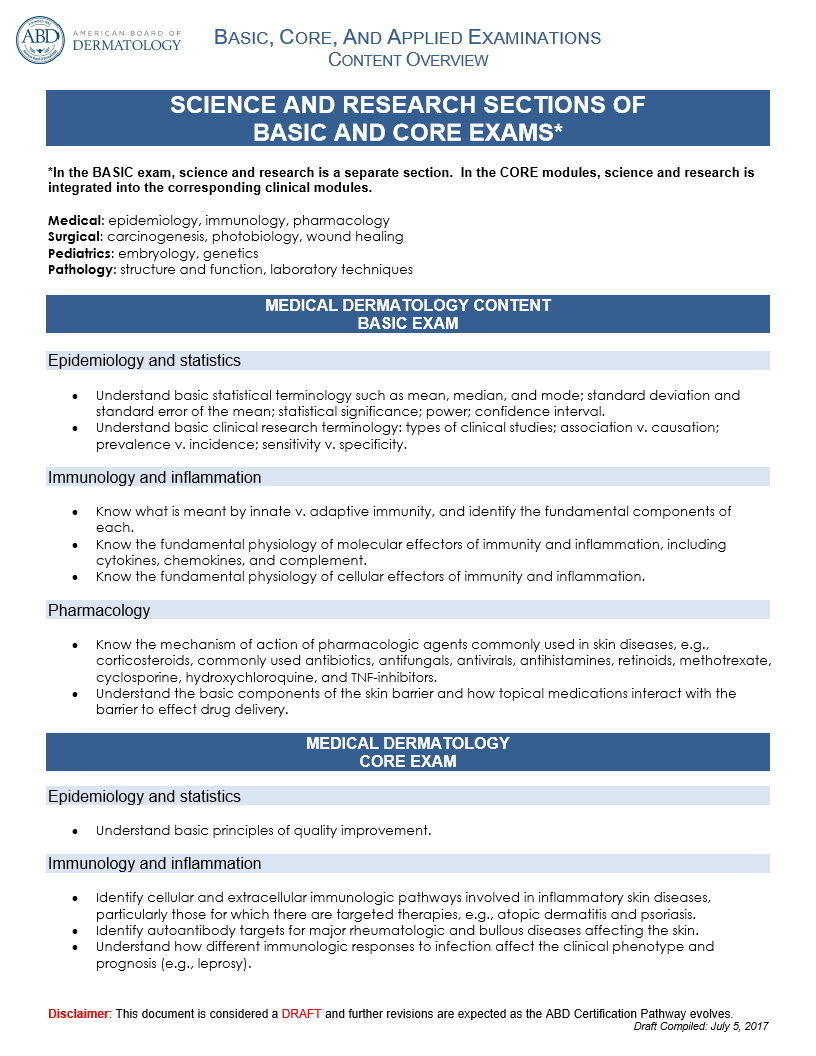
SCIENCE AND RESEARCH SECTIONS OF
BASIC AND CORE EXAMS*
*In the BASIC exam, science and research is a separate section. In the CORE modules, science and research is
integrated into the corresponding clinical modules.
Medical: epidemiology, immunology, pharmacology
Surgical: carcinogenesis, photobiology, wound healing
Pediatrics: embryology, genetics
Pathology: structure and function, laboratory techniques
MEDICAL DERMATOLOGY CONTENT
BASIC EXAM
Epidemiology and statistics
• Understand basic statistical terminology such as mean, median, and mode; standard deviation and
standard error of the mean; statistical significance; power; confidence interval.
• Understand basic clinical research terminology: types of clinical studies; association v. causation;
prevalence v. incidence: sensitivity v. specificity.
Immunology and inflammation
• Know what is meant by innate v. adaptive immunity, and identify the fundamental components of
each.
• Know the fundamental physiology of molecular effectors of immunity and inflammation, including
cytokines, chemokines, and complement.
• Know the fundamental physiology of cellular effectors of immunity and inflammation.
Pharmacology
• Know the mechanism of action of pharmacologic agents commonly used in skin diseases, e.g..
corticosteroids, commonly used antibiotics, antifungals, antivirals, antihistamines, retinoids, methotrexate,
cyclosporine, hydroxychloroquine, and TNF-inhibitors.
Understand the basic components of the skin barrier and how topical medications interact with the
barrier to effect drug delivery.
MEDICAL DERMATOLOGY
CORE EXAM
Epidemiology and statistics
• Understand basic principles of quality improvement.
Immunology and inflammation
• Identify cellular and extracellular immunologic pathways involved in inflammatory skin diseases,
particularly those for which there are targeted therapies, e.g., atopic dermatitis and psoriasis.
•
Identify autoantibody targets for major rheumatologic and bullous diseases affecting the skin.
Understand how different immunologic responses to infection affect the clinical phenotype and
prognosis (e.g., leprosy) .
Disclaimer: This document is considered a DRAFT and further revisions are expected as the ABD Certification Pathway evolves.
Draft Compiled: July 5, 2017
Page 14
ABD
AMERICAN BOARD OF
DERMATOLOGY
BASIC, CORE, AND APPLIED ExAMINATIONS
CONTENT OVERVIEW
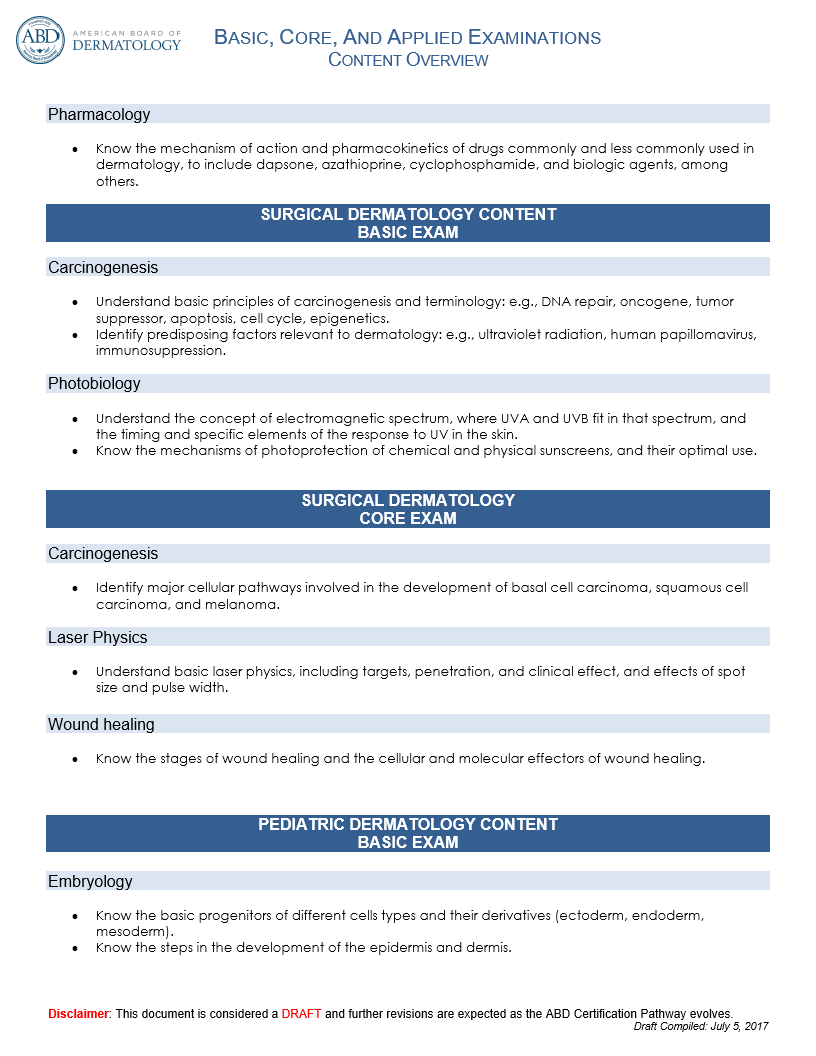
Pharmacology
• Know the mechanism of action and pharmacokinetics of drugs commonly and less commonly used in
dermatology, to include dapsone, azathioprine, cyclophosphamide, and biologic agents, among
others.
SURGICAL DERMATOLOGY CONTENT
BASIC EXAM
Carcinogenesis
• Understand basic principles of carcinogenesis and terminology: e.g., DNA repair, oncogene, tumor
suppressor, apoptosis, cell cycle, epigenetics.
•
Identify predisposing factors relevant to dermatology: e.g., ultraviolet radiation, human papillomavirus,
immunosuppression.
Photobiology
• Understand the concept of electromagnetic spectrum, where UVA and UVB fit in that spectrum, and
the timing and specific elements of the response to UV in the skin.
• Know the mechanisms of photoprotection of chemical and physical sunscreens, and their optimal use.
SURGICAL DERMATOLOGY
CORE EXAM
Carcinogenesis
• Identify major cellular pathways involved in the development of basal cell carcinoma, squamous cell
carcinoma, and melanoma.
Laser Physics
• Understand basic laser physics, including targets, penetration, and clinical effect, and effects of spot
size and pulse width.
Wound healing
• Know the stages of wound healing and the cellular and molecular effectors of wound healing.
PEDIA TRIC DERMATOLOGY CONTENT
BASIC EXAM
Embryology
• Know the basic progenitors of different cells types and their derivatives (ectoderm, endoderm,
mesoderm).
• Know the steps in the development of the epidermis and dermis.
Disclaimer: This document is considered a DRAFT and further revisions are expected as the ABD Certification Pathway evolves.
Draft Compiled: July 5, 2017
Page 15
ABI
AMERICAN BUKU Or
DERMATOLOGY
BASIC, CORE, AND APPLIED EXAMINATIONS
CONTENT OVERVIEW
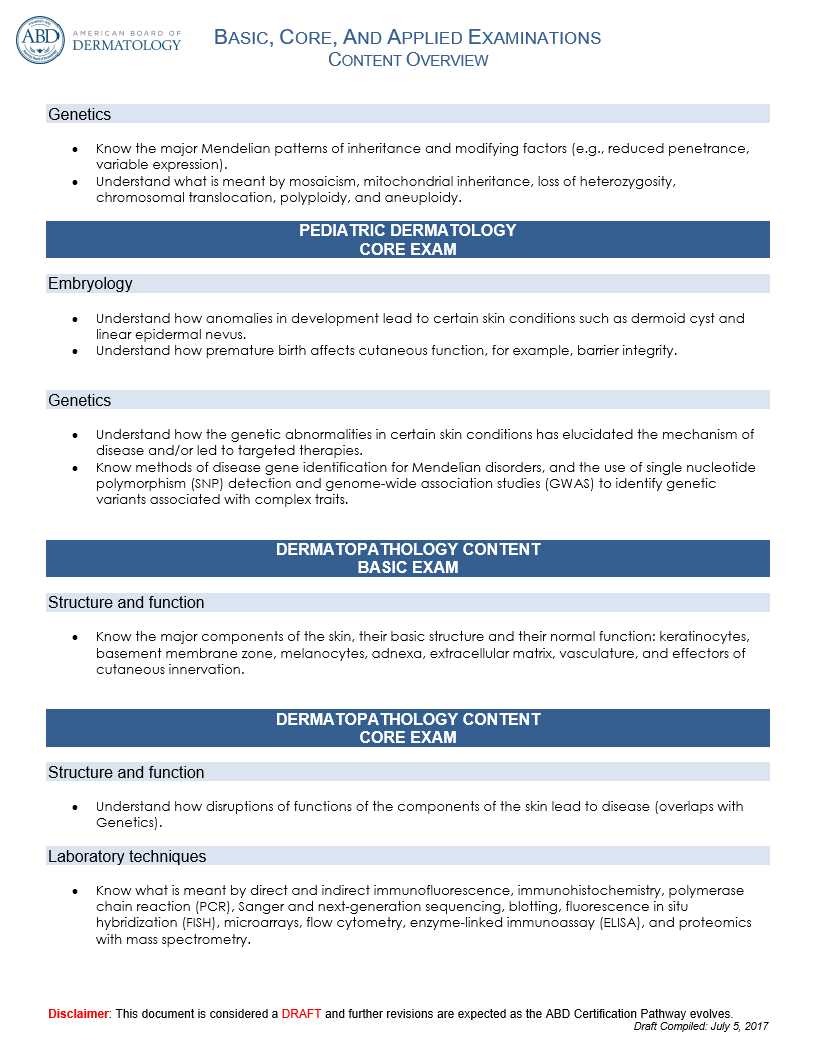
Genetics
• Know the major Mendelian patterns of inheritance and modifying factors (e.g., reduced penetrance,
variable expression).
Understand what is meant by mosaicism, mitochondrial inheritance, loss of heterozygosity.
chromosomal translocation, polyploidy, and aneuploidy.
PEDIA TRIC DERMATOLOGY
CORE EXAM
Embryology
• Understand how anomalies in development lead to certain skin conditions such as dermoid cyst and
linear epidermal nevus.
• Understand how premature birth affects cutaneous function, for example, barrier integrity.
Genetics
• Understand how the genetic abnormalities in certain skin conditions has elucidated the mechanism of
disease and/or led to targeted therapies.
• Know methods of disease gene identification for Mendelian disorders, and the use of single nucleotide
polymorphism (SNP) detection and genome-wide association studies (GWAS) to identify genetic
variants associated with complex traits.
DERMA TOPATHOLOGY CONTENT
BASIC EXAM
Structure and function
• Know the major components of the skin, their basic structure and their normal function: keratinocytes,
basement membrane zone, melanocytes, adnexa, extracellular matrix, vasculature, and effectors of
cutaneous innervation.
DERMA TOPATHOLOGY CONTENT
CORE EXAM
Structure and function
• Understand how disruptions of functions of the components of the skin lead to disease (overlaps with
Genetics).
Laboratory techniques
• Know what is meant by direct and indirect immunofluorescence, immunchistochemistry, polymerase
chain reaction (PCR), Sanger and next-generation sequencing, blotting, fluorescence in situ
hybridization (FISH), microarrays, flow cytometry, enzyme-linked immunoassay (ELISA), and proteomics
with mass spectrometry.
Disclaimer: This document is considered a DRAFT and further revisions are expected as the ABD Certification Pathway evolves.
Draft Compiled: July 5, 2017
Page 16
ABD
ANCKIRAN DAKE OF
DERMATOLOGY
CERTIFICATION PATHWAY
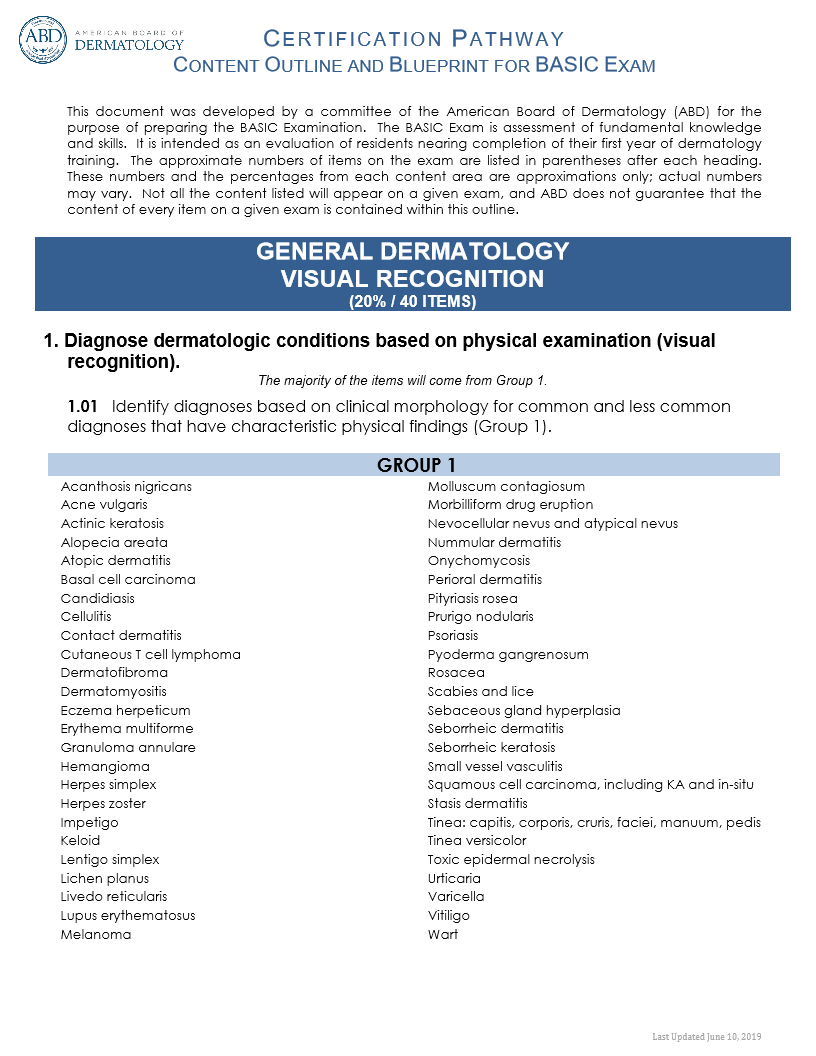
Content Outline and Blueprint for BASIC Exam
This document was developed by a committee of the American Board of Dermatology (ABD) for the
purpose of preparing the BASIC Examination.
The BASIC Exam is assessment of fundamental knowledge
and skills. It is intended as an evaluation of residents nearing completion of their first year of dermatology
training. The approximate numbers of items on the exam are listed in parentheses after each heading.
These numbers and the percentages from each content area are approximations only; actual numbers
may vary. Not all the content listed will appear on a given exam, and ABD does not guarantee that the
content of every item on a given exam is contained within this outline.
GENERAL DERMATOLOGY
VISUAL RECOGNITION
(20% / 40 ITEMS)
- Diagnose dermatologic conditions based on physical examination (visual
recognition).
The majority of the items will come from Group 1.
1.01 Identify diagnoses based on clinical morphology for common and less common
diagnoses that have characteristic physical findings (Group 1).
Acanthosis nigricans
Acne vulgaris
Actinic keratosis
Alopecia areata
Atopic dermatitis
Basal cell carcinoma
Candidiasis
Cellulitis
Contact dermatitis
Cutaneous T cell lymphoma
Dermatofibroma
Dermatomyositis
Eczema herpeticum
Erythema multiforme
Granuloma annulare
Hemangioma
Herpes simplex
Herpes zoster
Impetigo
Keloid
Lentigo simplex
Lichen planus
Livedo reticularis
Lupus erythematosus
Melanoma
GROUP 1
Molluscum contagiosum
Morbilliform drug eruption
Nevocellular nevus and atypical nevus
Nummular dermatitis
Onychomycosis
Perioral dermatitis
Pityriasis rosea
Prurigo nodularis
Psoriasis
Pyoderma gangrenosum
Rosacea
Scabies and lice
Sebaceous gland hyperplasia
Seborheic dermatitis
Seborheic keratosis
Small vessel vasculitis
Squamous cell carcinoma, including KA and in-situ
Stasis dermatitis
Tinea: capitis, corporis, cruris, faciei, manuum, pedis
Tinea versicolor
Toxic epidermal necrolysis
Urticaria
Varicella
Vitiligo
Wart
Last Updated June 10, 2019
Page 17
ABD
AMERICAN BOARD OF
DERMATOLOGY
CERTIFICATION PATHWAY
Content Outline and Blueprint for BASIC Exam
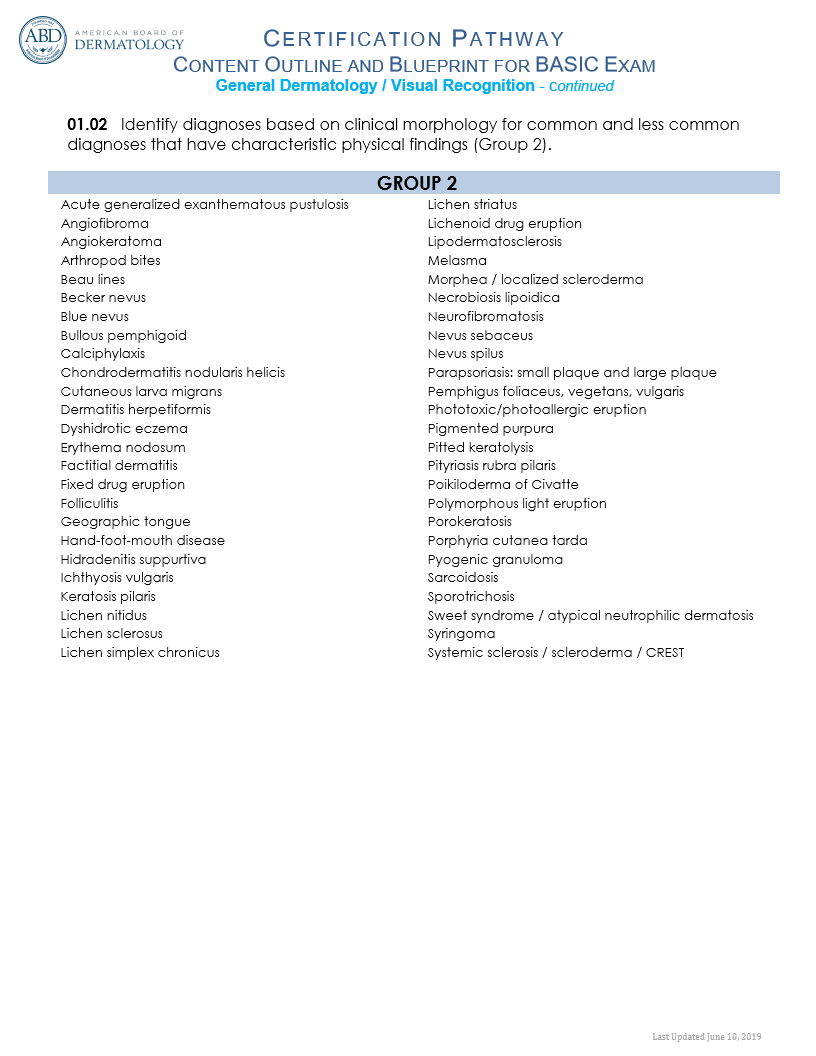
General Dermatology / Visual Recognition - Continued
01.02 Identify diagnoses based on clinical morphology for common and less common
diagnoses that have characteristic physical findings (Group 2).
Acute generalized exanthematous pustulosis
Angiofibroma
Angiokeratoma
Arthropod bites
Beau lines
Becker nevus
Blue nevus
Bullous pemphigold
Calciphylaxis
Chondrodermatitis nodularis helicis
Cutaneous larva migrans
Dermatitis herpetiformis
Dyshidrotic eczema
Erythema nodosum
Factitial dermatitis
Fixed drug eruption
Folliculitis
Geographic tongue
Hand-foot-mouth disease
Hidradenitis suppurtiva
Ichthyosis vulgaris
Keratosis pilaris
Lichen nitidus
Lichen sclerosus
Lichen simplex chronicus
GROUP 2
Lichen striatus
Lichenoid drug eruption
Lipodermatosclerosis
Melasma
Morphea / localized scleroderma
Necrobiosis lipoidica
Neurofibromatosis
Nevus sebaceus
Nevus spilus
Parapsoriasis: small plaque and large plaque
Pemphigus foliaceus, vegetans, vulgaris
Phototoxic/photoallergic eruption
Pigmented purpura
Pitted keratolysis
Pityriasis rubra pilaris
Poikiloderma of Civatte
Polymorphous light eruption
Porokeratosis
Porphyria cutanea tarda
Pyogenic granuloma
Sarcoidosis
Sporotrichosis
Sweet syndrome / atypical neutrophilic dermatosis
Syringoma
Systemic sclerosis / scleroderma / CREST
Last Updated June 10, 2019|
Page 18
ABD
AMERICAN BOARD OF
DERMATOLOGY
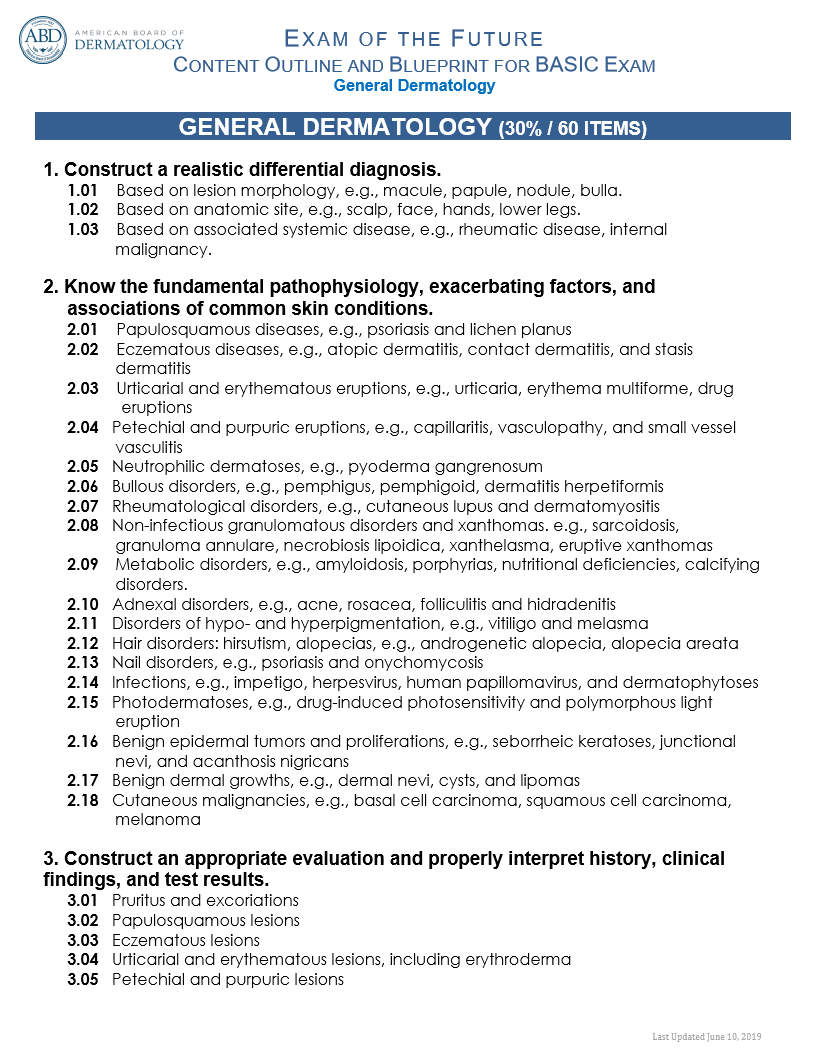
EXAM OF THE FUTURE
CONTENt OUTLINE AND BLuEPRINt FOr BASIC ExAM
General Dermatology
GENERAL DERMATOLOGY (30% / 60 ITEMS)
- Construct a realistic differential diagnosis.
1.01
1.02
Based on lesion morphology, e.g., macule, papule, nodule, bulla.
Based on anatomic site, e.g., scalp, face, hands, lower legs.
1.03
Based on associated systemic disease, e.g., rheumatic disease, internal
malignancy. - Know the fundamental pathophysiology, exacerbating factors, and
associations of common skin conditions.
2.01 Papulosquamous diseases, e.g., psoriasis and lichen planus
2.02
Eczematous diseases, e.g., atopic dermatitis, contact dermatitis, and stasis
dermatitis
2.03
Urticarial and erythematous eruptions, e.g., urticaria, erythema multiforme, drug
eruptions
2.04 Petechial and purpuric eruptions, e.g., capillaritis, vasculopathy, and small vessel
vasculitis
2.05 Neutrophilic dermatoses, e.g., pyoderma gangrenosum
2.06
Bullous disorders, e.g., pemphigus, pemphigoid, dermatitis herpetiformis
2.07
kheumatological disorders, e.g., cutaneous lupus and dermatomyositis
2.08
Non-infectious granulomatous disorders and xanthomas. e.g., sarcoidosis,
granuloma annulare, necrobiosis lipoidica, xanthelasma, eruptive xanthomas
2.09
Metabolic disorders, e.g., amyloidosis, porphyrias, nutritional deficiencies, calcifying
disorders.
2.10 Adnexal disorders, e.g., acne, rosacea, folliculitis and hidradenitis
2.11 Disorders of hypo- and hyperpigmentation, e.g., vitiligo and melasma
2.12 Hair disorders: hirsutism, alopecias, e.g., androgenetic alopecia, alopecia areata
2.13
Nail disorders, e.g., psoriasis and onychomycosis
2.14 Infections, e.g., impetigo, herpesvirus, human papillomavirus, and dermatophytoses
Photodermatoses, e.g., drug-induced photosensitivity and polymorphous light
eruption
2.16
Benign epidermal tumors and proliferations, e.g., seborheic keratoses, junctional
nevi, and acanthosis nigricans
2.17 Benign dermal growths, e.g., dermal nevi, cysts, and lipomas
2.18 Cutaneous malignancies, e.g., basal cell carcinoma, squamous cell carcinoma,
melanoma - Construct an appropriate evaluation and properly interpret history, clinical
findings, and test results.
3.01 Pruritus and excoriations
3.02 Papulosquamous lesions
3.03 Eczematous lesions
3.04 Urticarial and erythematous lesions, including erythroderma
3.05 Petechial and purpuric lesions
Last Updated June 10, 2019|
Page 19
ABD
AMERICAN BOARD OF
DERMATOLOGY
EXAM OF THE FUTURE
CoNtent OutLINE ANd BLuePRINT FOr BASIC ExaM
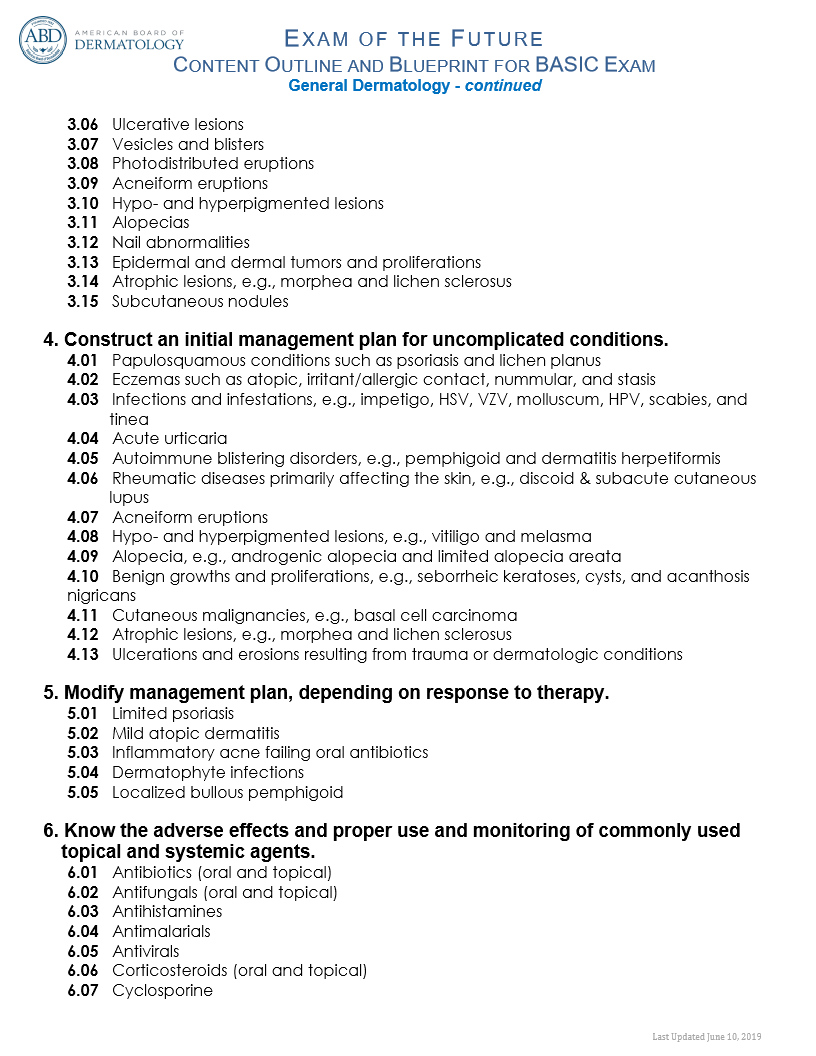
General Dermatology - continued
3.06 Ulcerative lesions
3.07 Vesicles and blisters
3.08 Photodistributed eruptions
3.09 Acneiform eruptions
3.10 Hypo- and hyperpigmented lesions
3.11
Alopecias
3.12 Nail abnormalities
3.13
Epidermal and dermal tumors and proliferations
3.14 Atrophic lesions, e.g., morphea and lichen sclerosus
3.15 Subcutaneous nodules
4. Construct an initial management plan for uncomplicated conditions.
4.01 Papulosquamous conditions such as psoriasis and lichen planus
4.02 Eczemas such as atopic, irritant/allergic contact, nummular, and stasis
4.03 Infections and infestations, e.g., impetigo, HSV, VZV, molluscum, HPV, scabies, and
Tinea
4.04 Acute urticaria
4.05 Autoimmune blistering disorders, e.g., pemphigoid and dermatitis herpetiformis
4.06
Rheumatic diseases primarily affecting the skin, e.g., discoid & subacute cutaneous
4.07
Acneiform eruptions
4.08 Hypo- and hyperpigmented lesions, e.g., vitiligo and melasma
4.09 Alopecia, e.g., androgenic alopecia and limited alopecia areata
4.10 Benign growths and proliferations, e.g., seborrheic keratoses, cysts, and acanthosis
nigricans
4.11 Cutaneous malignancies, e.g., basal cell carcinoma
4.12 Atrophic lesions, e.g., morphea and lichen sclerosus
4.13 Ulcerations and erosions resulting from trauma or dermatologic conditions
5. Modify management plan, depending on response to therapy.
5.01 Limited psoriasis
5.02 Mild atopic dermatitis
5.03
Inflammatory acne failing oral antibiotics
5.04 Dermatophyte infections
5.05 Localized bullous pemphigoid
6. Know the adverse effects and proper use and monitoring of commonly used
topical and systemic agents.
6.01 Antibiotics (oral and topical)
6.02 Antifungals (oral and topical)
6.03 Antihistamines
6.04 Antimalarials
6.05 Antivirals
6.06 Corticosteroids (oral and topical)
6.07 Cyclosporine
Last Updated June 10, 2019|
Page 20
ABD
AMERICAN BOARD OF
DERMATOLOGY
EXAM OF THE FUTURE
CONTENt OUTLINE AND BLuEPRINt FOr BASIC ExAM
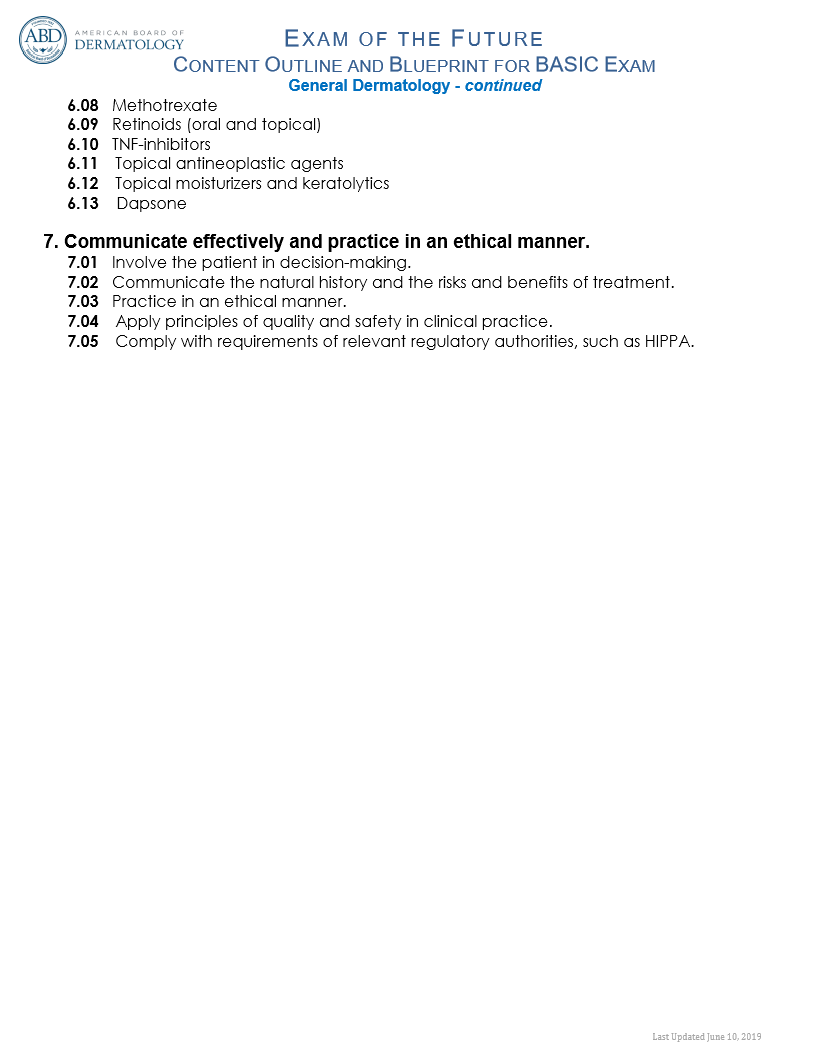
General Dermatology - continued
6.08 Methotrexate
6.09 Retinoids (oral and topical)
6.10 TNF-inhibitors
6.11 Topical antineoplastic agents
6.12 Topical moisturizers and keratolytics
6.13
Dapsone
7. Communicate effectively and practice in an ethical manner.
7.01 Involve the patient in decision-making.
7.02 Communicate the natural history and the risks and benefits of treatment.
7.03 Practice in an ethical manner.
7.04 Apply principles of quality and safety in clinical practice.
7.05 Comply with requirements of relevant regulatory authorities, such as HIPPA.
Last Updated June 10, 2019|
Page 21
ABD
AMERICAN BOARD OF
DERMATOLOGY
EXAM OF THE FUTURE
CoNteNt OuTLINE AND BLuePRINT FOr BASIC Exam
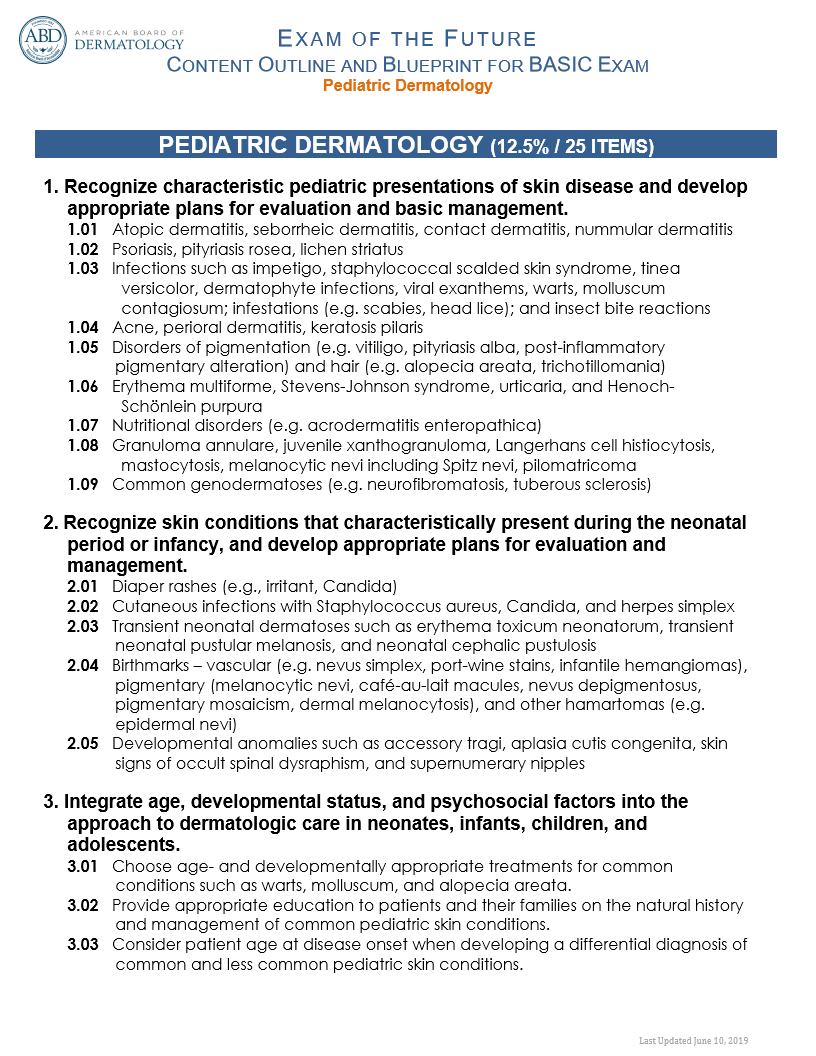
Pediatric Dermatology
PEDIATRIC DERMATOLOGY (12.5% / 25 ITEMS)
- Recognize characteristic pediatric presentations of skin disease and develop
appropriate plans for evaluation and basic management.
1.01 Atopic dermatitis, seborheic dermatitis, contact dermatitis, nummular dermatitis
1.02 Psoriasis, pityriasis rosea, lichen striatus
1.03
Infections such as impetigo, staphylococcal scalded skin syndrome, tinea
versicolor, dermatophyte infections, viral exanthems, warts, molluscum
contagiosum; infestations (e.g. scabies, head lice); and insect bite reactions
1.04
Acne, perioral dermatitis, keratosis pilaris
1.05
Disorders of pigmentation (e.g. vitiligo, pityriasis alba, post-inflammatory
pigmentary alteration) and hair (e.g. alopecia areata, trichotillomania)
1.06 Erythema multiforme, Stevens-Johnson syndrome, urticaria, and Henoch-
Schönlein purpura
1.07
Nutritional disorders (e.g. acrodermatitis enteropathica)
1.08 Granuloma annulare, juvenile xanthogranuloma, Langerhans cell histiocytosis,
mastocytosis, melanocytic nevi including Spitz nevi, pilomatricoma
1.09 Common genodermatoses (e.g. neurofibromatosis, tuberous sclerosis) - Recognize skin conditions that characteristically present during the neonatal
period or intancy, and develop appropriate plans for evaluation and
management.
2.01 Diaper rashes (e.g., irritant, Candida)
2.02 Cutaneous infections with Staphylococcus aureus, Candida, and herpes simplex
2.03 Transient neonatal dermatoses such as erythema toxicum neonatorum, transient
neonatal pustular melanosis, and neonatal cephalic pustulosis
2.04 Birthmarks - vascular (e.g. nevus simplex, port-wine stains, infantile hemangiomas),
pigmentary (melanocytic nevi, café-au-lait macules, nevus depigmentosus,
pigmentary mosaicism, dermal melanocytoss), and other hamartomas (e.g.
epidermal nevi)
2.05 Developmental anomalies such as accessory tragi, aplasia cutis congenita, skin
signs of occult spinal dysraphism, and supernumerary nipples - Integrate age, developmental status, and psychosocial factors into the
approach to dermatologic care in neonates, infants, children, and
adolescents.
3.01 Choose age- and developmentally appropriate treatments for common
conditions such as warts, molluscum, and alopecia areata.
3.02 Provide appropriate education to patients and their families on the natural history
and management of common pediatric skin conditions.
3.03 Consider patient age at disease onset when developing a differential diagnosis of
common and less common pediatric skin conditions.
Last Updated June 10, 2019|
Page 22
ABD
AMERICAN BOARD OF
DERMATOLOGY
EXAM OF THE FUTURE
Content OutLINe And BLuePrINt FOr BASIC Exam
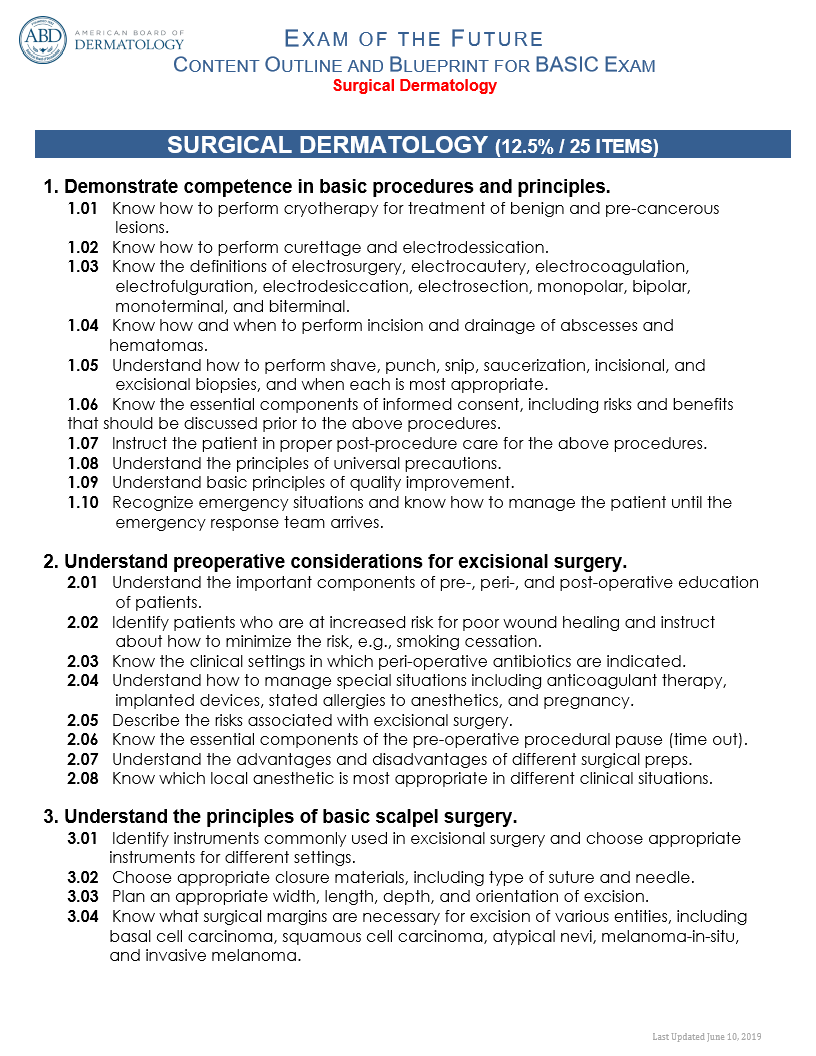
Surgical Dermatology
SURGICAL DERMATOLOGY (12.5% / 25 ITEMS)
- Demonstrate competence in basic procedures and principles.
1.01 Know how to perform cryotherapy for treatment of benign and pre-cancerous
lesions.
1.02 Know how to perform curettage and electrodessication.
1.03
Know the definitions of electrosurgery, electrocutery, electrocoagulation,
electrofulguration, electrodesiccation, electrosection, monopolar, bipolar,
monoterminal, and biterminal.
1.04
Know how and when to perform incision and drainage of abscesses and
hematomas.
1.05
Understand how to perform shave, punch, snip, saucerization, incisional, and
excisional biopsies, and when each is most appropriate.
1.06 Know the essential components of informed consent, including risks and benefits
that should be discussed prior to the above procedures.
1.07 Instruct the patient in proper post-procedure care for the above procedures.
1.08 Understand the principles of universal precautions.
1.09 Understand basic principles of quality improvement.
1.10
Recognize emergency situations and know how to manage the patient until the
emergency response team arrives. - Understand preoperative considerations for excisional surgery.
2.01 Understand the important components of pre-, peri-, and post-operative education
of patients.
2.02 Identify patients who are at increased risk for poor wound healing and instruct
about how to minimize the risk, e.g., smoking cessation.
2.03
Know the clinical settings in which peri-operative antibiotics are indicated.
2.04
Understand how to manage special situations including anticoagulant therapy,
implanted devices, stated allergies to anesthetics, and pregnancy.
2.05
Describe the risks associated with excisional surgery.
2.06 Know the essential components of the pre-operative procedural pause (time out).
2.07 Understand the advantages and disadvantages of different surgical preps.
2.08 Know which local anesthetic is most appropriate in different clinical situations. - Understand the principles of basic scalpel surgery.
3.01 Identify instruments commonly used in excisional surgery and choose appropriate
instruments for different settings.
3.02 Choose appropriate closure materials, including type of suture and needle.
3.03 Plan an appropriate width, length, depth, and orientation of excision.
3.04 Know what surgical margins are necessary for excision of various entities, including
basal cell carcinoma, squamous cell carcinoma, atypical nevi, melanoma-in-situ,
and invasive melanoma.
Last Updated June 10, 2019|
Page 23
ABD
AMERICAN BOARD OF
DERMATOLOGY
EXAM OF THE FUTURE
Content OutLINe And BLuePrINt FOr BASIC Exam
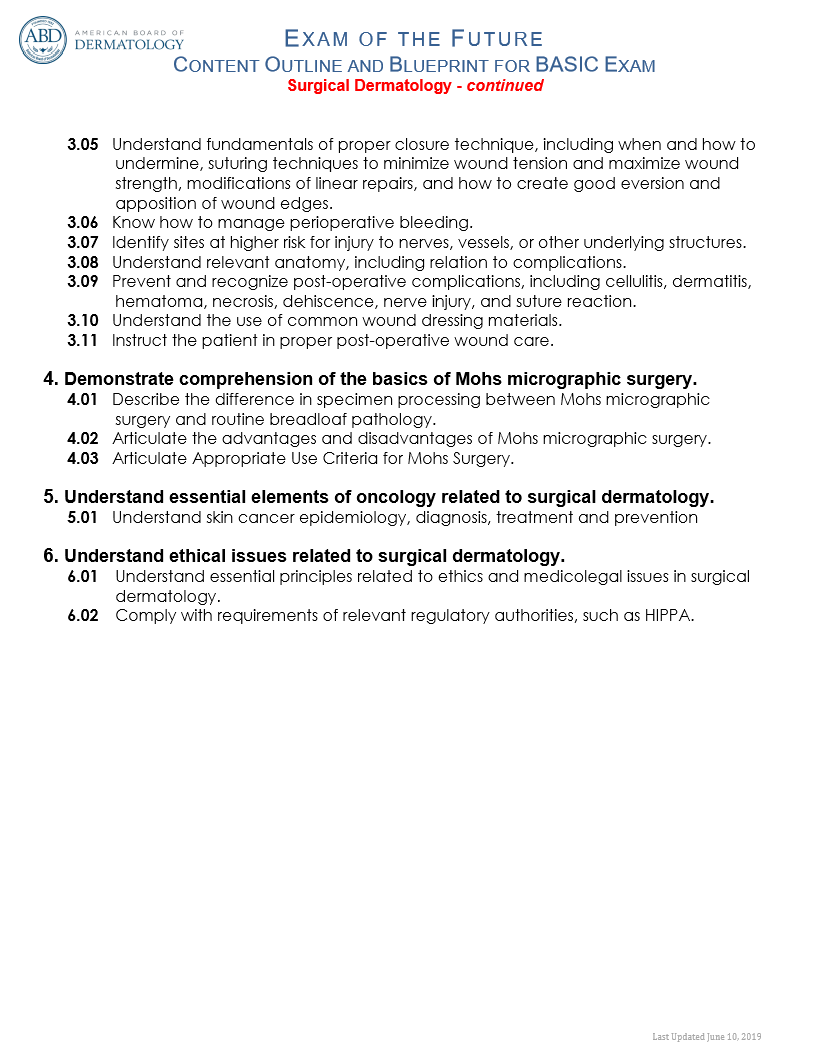
Surgical Dermatology - continued
3.05 Understand fundamentals of proper closure technique, including when and how to
undermine, suturing techniques to minimize wound tension and maximize wound
strength, modifications of linear repairs, and how to create good eversion and
apposition of wound edges.
3.06
Know how to manage perioperative bleeding.
3.07 Identify sites at higher risk for injury to nerves, vessels, or other underlying structures.
3.08 Understand relevant anatomy, including relation to complications.
3.09 Prevent and recognize post-operative complications, including cellulitis, dermatitis,
hematoma, necrosis, dehiscence, nerve injury, and suture reaction.
3.10 Understand the use of common wound dressing materials.
3.11
Instruct the patient in proper post-operative wound care.
4. Demonstrate comprehension of the basics of Mohs micrographic surgery.
4.01 Describe the difference in specimen processing between Mohs micrographic
surgery and routine breadloaf pathology.
4.02 Articulate the advantages and disadvantages of Mohs micrographic surgery.
4.03 Articulate Appropriate Use Criteria for Mohs Surgery.
5. Understand essential elements of oncology related to surgical dermatology.
5.01 Understand skin cancer epidemiology, diagnosis, treatment and prevention
6. Understand ethical issues related to surgical dermatology.
6.01 Understand essential principles related to ethics and medicolegal issues in surgical
6.02
dermatology.
Comply with requirements of relevant regulatory authorities, such as HIPPA.
Last Updated June 10, 2019|
Page 24
ABD
AMERICAN BOARD OF
DERMATOLOGY
EXAM OF THE FUTURE
CONTENT OUTLINE AND BLUEPRINT FOR BASIC ExAM
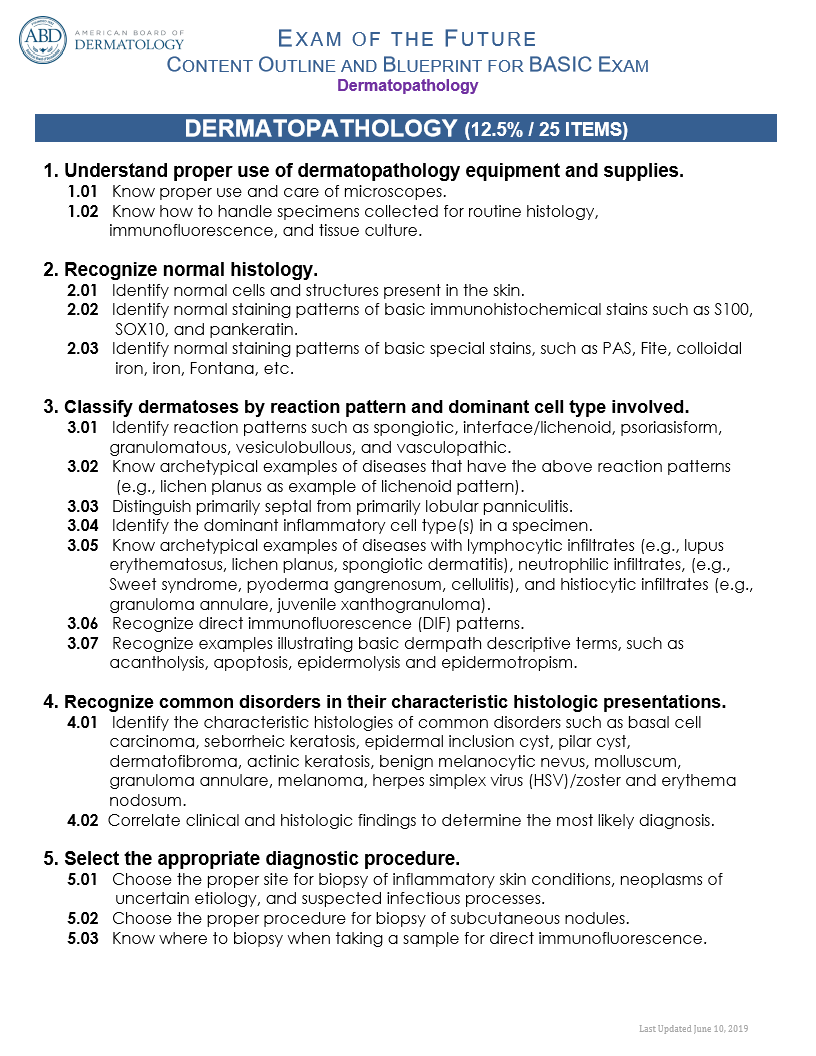
Dermatopathology
DERMATOPATHOLOGY (12.5% / 25 ITEMS)
- Understand proper use of dermatopathology equipment and supplies.
1.01 Know proper use and care of microscopes.
1.02 Know how to handle specimens collected for routine histology,
immunofluorescence, and tissue culture. - Recognize normal histology.
2.01 Identify normal cells and structures present in the skin.
2.02 Identify normal staining patterns of basic immunohistochemical stains such as $100,
SOX10, and pankeratin.
2.03
Identify normal staining patterns of basic special stains, such as PAS, Fite, colloidal
iron, iron, Fontana, etc. - Classify dermatoses by reaction pattern and dominant cell type involved.
3.01 Identify reaction patterns such as spongiotic, interface/lichenoid, psoriasisform,
granulomatous, vesiculobullous, and vasculopathic.
3.02 Know archetypical examples of diseases that have the above reaction patterns
(e.g., lichen plans as example of lichenoid pattern).
3.03
Distinguish primarily septal from primarily lobular panniculitis.
3.04
Identify the dominant inflammatory cell type s) in a specimen.
3.05
Know archetypical examples of diseases with lymphocytic infiltrates (e.g., lupus
erythematosus, lichen planus, spongiotic dermatitis), neutrophilic infiltrates, (e.g.,
Sweet syndrome, pyoderma gangrenosum, cellulitis), and histiocytic infiltrates (e.g.,
granuloma annulare, juvenile xanthogranuloma).
3.06 Recognize direct immunofluorescence (DIF) patterns.
3.07 Recognize examples illustrating basic dermpath descriptive terms, such as
acantholysis, apoptosis, epidermolysis and epidermotropism. - Recognize common disorders in their characteristic histologic presentations.
4.01 Identify the characteristic histologies of common disorders such as basal cell
carcinoma, seborrheic keratosis, epidermal inclusion cyst, pilar cyst,
dermatofibroma, actinic keratosis, benign melanocytic nevus, molluscum,
granuloma annulare, melanoma, herpes simplex virus (HSV) /zoster and erythema
nodosum.
4.02 Correlate clinical and histologic findings to determine the most likely diagnosis. - Select the appropriate diagnostic procedure.
5.01 Choose the proper site for biopsy of inflammatory skin conditions, neoplasms of
uncertain etiology, and suspected infectious processes.
5.02 Choose the proper procedure for biopsy of subcutaneous nodules.
5.03 Know where to biopsy when taking a sample for direct immunofluorescence.
Last Updated June 10, 2019
Page 25
ABD
AMERICAN BOARD OF
DERMATOLOGY
EXAM OF THE FUTURE
Content Outline And Blueprint for BASIC Exam
Dermatopathology - continued
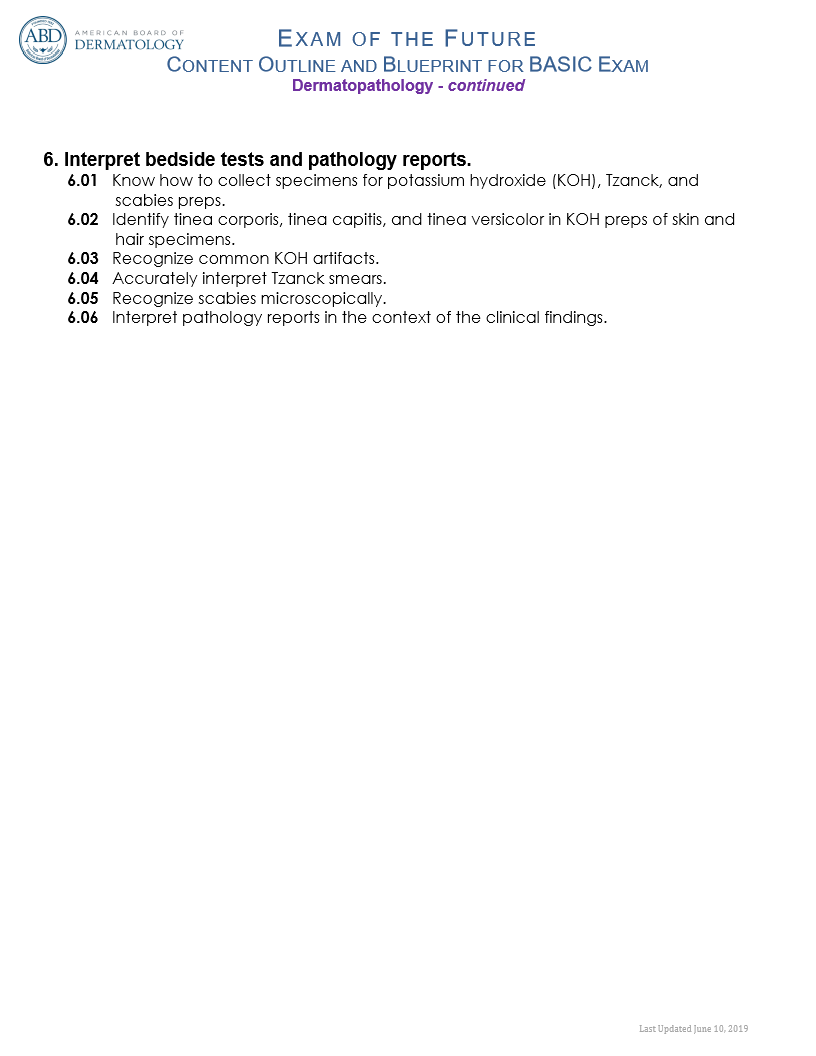
6. Interpret bedside tests and pathology reports.
6.01 Know how to collect specimens for potassium hydroxide (KOH), Tzanck, and
scabies preps.
6.02 Identify tinea corporis, tinea capitis, and tinea versicolor in KOH preps of skin and
hair specimens.
6.03 Recognize common KOH artifacts.
6.04 Accurately interpret Tzanck smears.
6.05 Recognize scabies microscopically.
6.06 Interpret pathology reports in the context of the clinical findings.
Last Updated June 10, 2019|
Page 26
ABD
AMERICAN BOARD OF
DERMATOLOGY
EXAM OF THE FUTURE
CoNteNt OuTLINE AND BLuePRINT FOr BASIC Exam
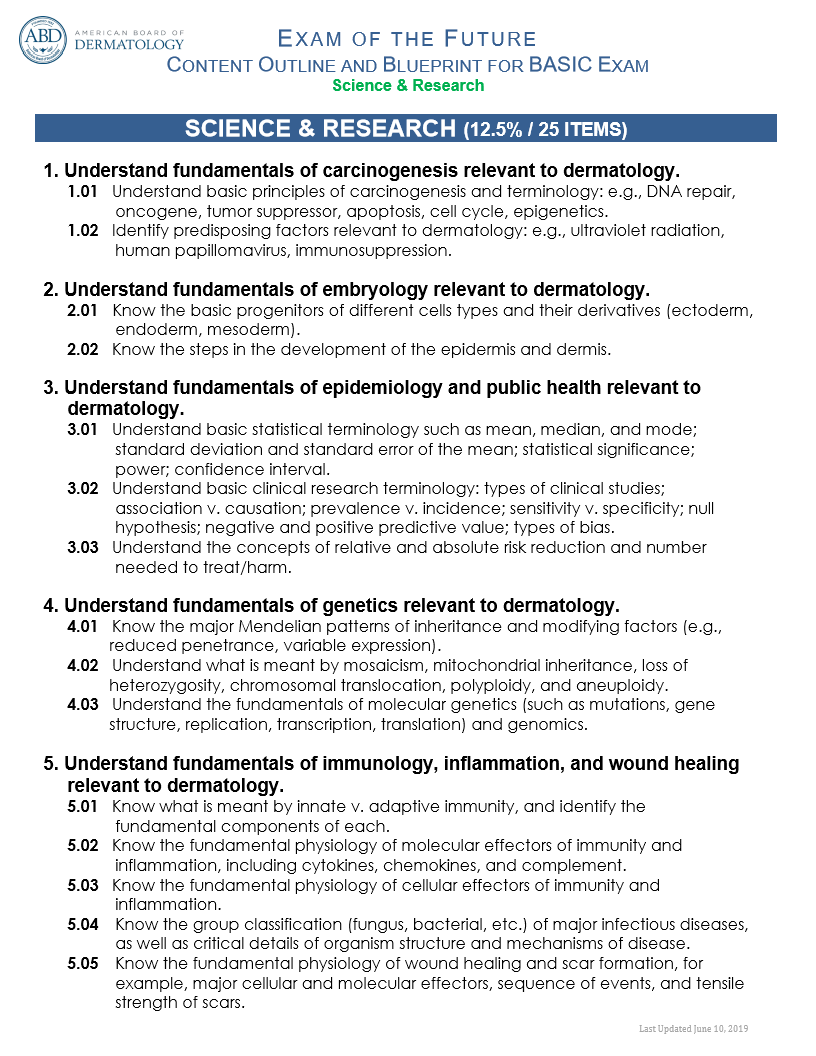
Science & Research
SCIENCE & RESEARCH (12.5% | 25 ITEMS)
- Understand fundamentals of carcinogenesis relevant to dermatology.
1.01 Understand basic principles of carcinogenesis and terminology: e.g., DNA repair,
oncogene, tumor suppressor, apoptosis, cell cycle, epigenetics.
1.02 Identify predisposing factors relevant to dermatology: e.g., ultraviolet radiation,
human papillomavirus, immunosuppression. - Understand fundamentals of embryology relevant to dermatology.
2.01 Know the basic progenitors of different cells types and their derivatives (ectoderm,
endoderm, mesoderm).
2.02 Know the steps in the development of the epidermis and dermis. - Understand fundamentals of epidemiology and public health relevant to
dermatology.
3.01 Understand basic statistical terminology such as mean, median, and mode;
standard deviation and standard error of the mean; statistical significance;
power; confidence interval.
3.02 Understand basic clinical research terminology: types of clinical studies;
association v. causation; prevalence v. incidence; sensitivity v. specificity; null
hypothesis; negative and positive predictive value; types ot bias.
3.03
Understand the concepts of relative and absolute risk reduction and number
needed to treat/harm. - Understand fundamentals of genetics relevant to dermatology.
4.01 Know the major Mendelian patterns of inheritance and modifying factors (e.g.,
reduced penetrance, variable expression).
4.02 Understand what is meant by mosaicism, mitochondrial inheritance, loss of
heterozygosity, chromosomal translocation, polyploidy, and aneuploidy.
4.03 Understand the fundamentals of molecular genetics (such as mutations, gene
structure, replication, transcription, translation) and genomics. - Understand fundamentals of immunology, inflammation, and wound healing
relevant to dermatology.
5.01 Know what is meant by innate v. adaptive immunity, and identify the
fundamental components of each.
5.02 Know the fundamental physiology of molecular effectors of immunity and
inflammation, including cytokines, chemokines, and complement.
5.03 Know the fundamental physiology of cellular effectors of immunity and
inflammation.
5.04
Know the group classification (fungus, bacterial, etc.) of major infectious diseases,
as well as critical details of organism structure and mechanisms of disease.
5.05 Know the fundamental physiology of wound healing and scar formation, for
example, major cellular and molecular effectors, sequence of events, and tensile
strength of scars.
Last Updated June 10, 2019|
Page 27
ABD
AMERICAN BOARD OF
DERMATOLOGY
EXAM OF THE FUTURE
CONTENT OUTLINE AND BLUEPRINT FOR BASIC ExAM
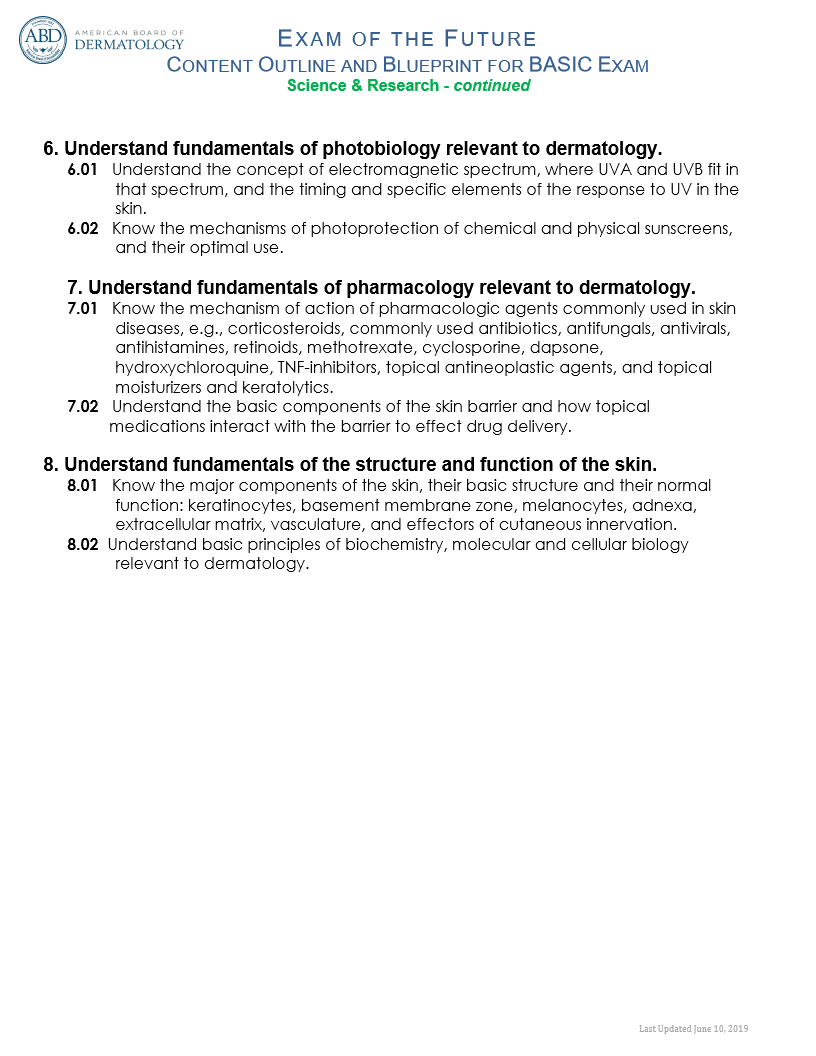
Science & Research - continued
6. Understand fundamentals of photobiology relevant to dermatology.
6.01 Understand the concept of electromagnetic spectrum, where UVA and UVB fit in
that spectrum, and the timing and specific elements of the response to UV in the
skin.
6.02 Know the mechanisms of photoprotection of chemical and physical sunscreens,
and their optimal use.
7. Understand fundamentals of pharmacology relevant to dermatology.
7.01 Know the mechanism of action of pharmacologic agents commonly used in skin
diseases, e.g., corticosteroids, commonly used antibiotics, antifungals, antivirals,
antihistamines, retinoids, methotrexate, cyclosporine, dapsone,
hydroxychloroquine, TNF-inhibitors, topical antineoplastic agents, and topical
moisturizers and keratolytics.
7.02 Understand the basic components of the skin barrier and how topical
medications interact with the barrier to effect drug delivery.
8. Understand fundamentals of the structure and function of the skin.
8.01 Know the major components of the skin, their basic structure and their normal
function: keratinocytes, basement membrane zone, melanocytes, adnexa,
extracellular matrix, vasculature, and effectors of cutaneous innervation.
8.02 Understand basic principles of biochemistry, molecular and cellular biology
relevant to dermatology.
Last Updated June 10, 2019|