Pediatric Dermatology PGY-2
Text from this document (searchable)
Page 1
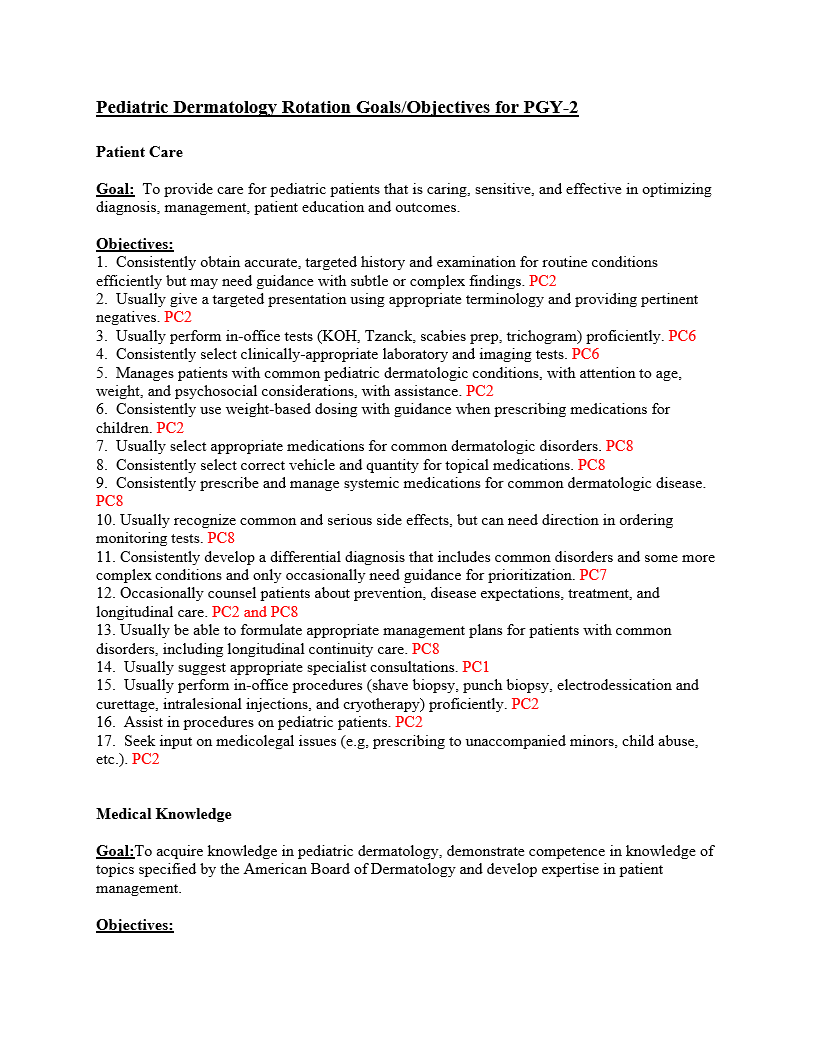
Pediatric Dermatology Rotation Goals/Objectives for PGY-2
Patient Care
Goal: To provide care for pediatric patients that is caring, sensitive, and effective in optimizing
diagnosis, management, patient education and outcomes.
Objectives:
- Consistently obtain accurate, targeted history and examination for routine conditions
efficiently but may need guidance with subtle or complex findings. PC2 - Usually give a targeted presentation using appropriate terminology and providing pertinent
negatives. PC2 - Usually perform in-office tests (KOH, Tzanck, scabies prep, trichogram) proficiently. PC6
- Consistently select clinically-appropriate laboratory and imaging tests. PC6
. Manages patients with common pediatric dermatologic conditions, with attention to age
veight, and psychosocial considerations, with assistance. PC2 - Consistently use weight-based dosing with guidance when prescribing medications for
children. PC2 - Usually select appropriate medications for common dermatologic disorders. PC8
- Consistently select correct vehicle and quantity for topical medications. PC8
- Consistently prescribe and manage systemic medications for common dermatologic disease.
PC8 - Usually recognize common and serious side effects, but can need direction in ordering
monitoring tests. PC8 - Consistently develop a differential diagnosis that includes common disorders and some more
complex conditions and only occasionally need guidance for prioritization. PC7 - Occasionally counsel patients about prevention, disease expectations, treatment, and
longitudinal care. PC2 and PC8 - Usually be able to formulate appropriate management plans for patients with common
disorders, including longitudinal continuity care. PC8 - Usually suggest appropriate specialist consultations. PC1
- Seek input on medicolegal issues (e.g. prescribing to unaccompanied minors, child abuse,
etc.). PC2
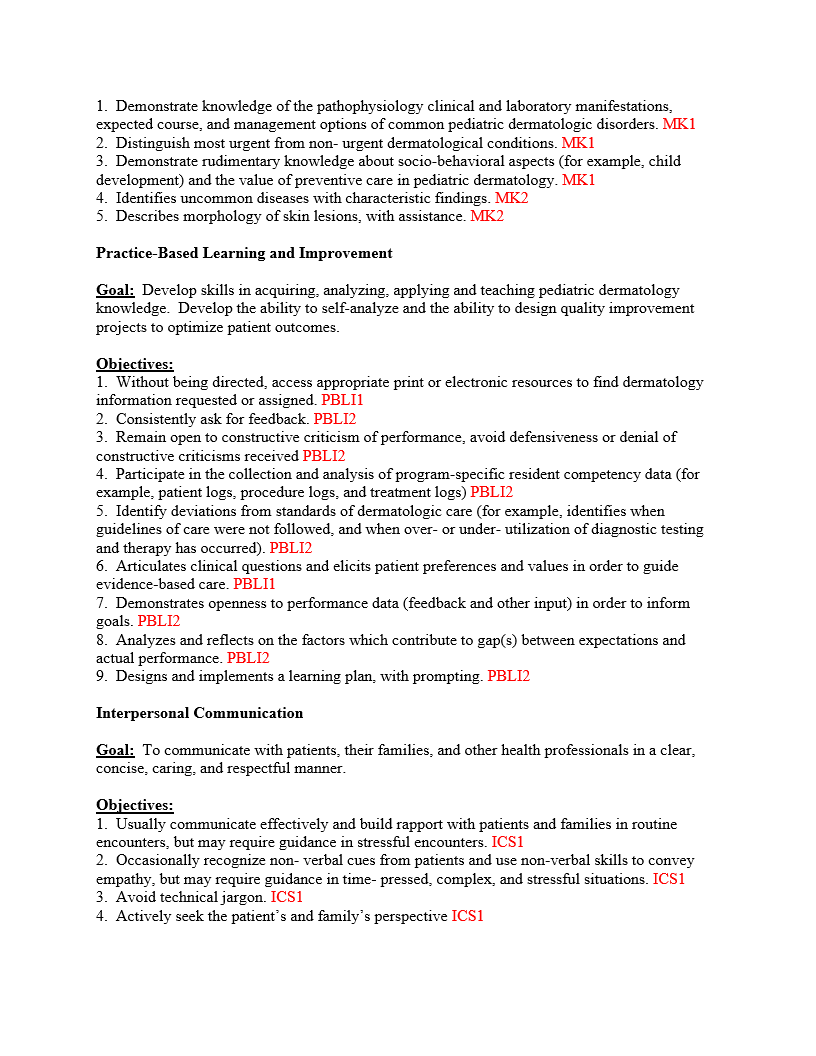
Medical Knowledge
Goal: To acquire knowledge in pediatric dermatology, demonstrate competence in knowledge of
topics specified by the American Board of Dermatology and develop expertise in patient
management.
Objectives:
Page 2
- Demonstrate knowledge of the pathophysiology clinical and laboratory manifestations,
expected course, and management options of common pediatric dermatologic disorders. MK1 - Distinguish most urgent from non- urgent dermatological conditions. MK1
- Demonstrate rudimentary knowledge about socio-behavioral aspects (for example, child
development) and the value of preventive care in pediatric dermatology. MK1 - Identifies uncommon diseases with characteristic findings. MK2
- Describes morphology of skin lesions, with assistance. MK2
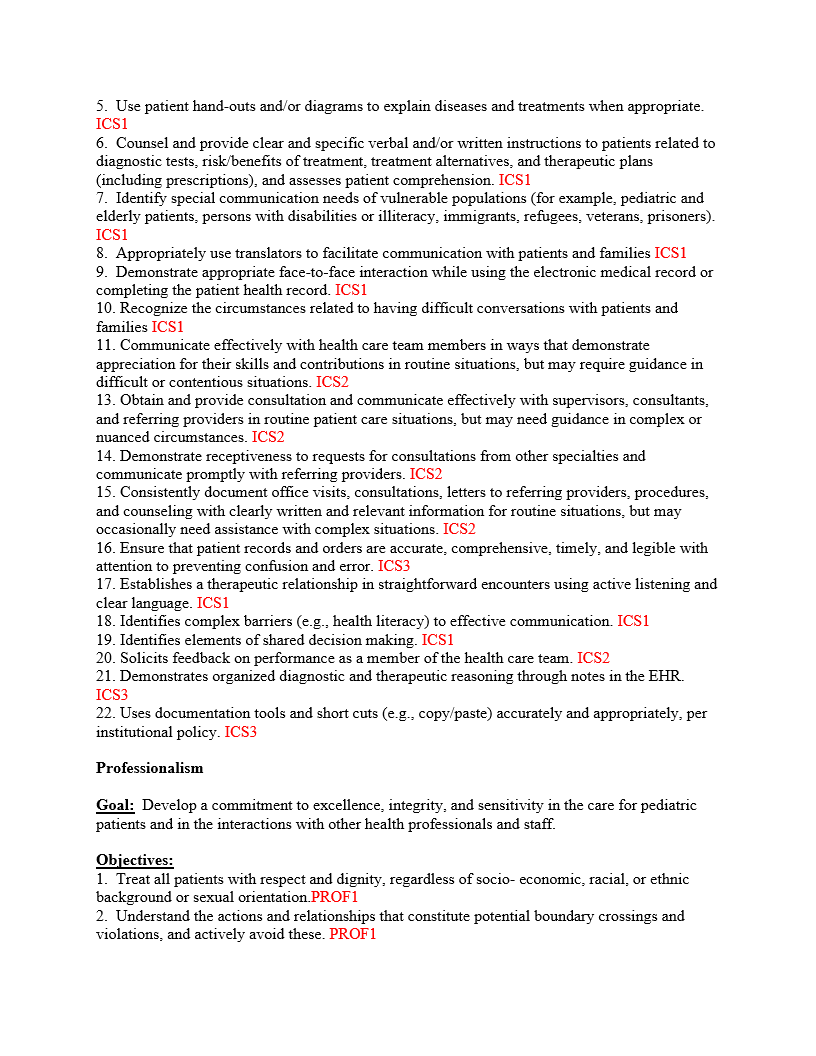
Practice-Based Learning and Improvement
Goal: Develop skills in acquiring, analyzing, applying and teaching pediatric dermatology
knowledge. Develop the ability to self-analyze and the ability to design quality improvement
projects to optimize patient outcomes.
Objectives: - Without being directed, access appropriate print or electronic resources to find dermatology
information requested or assigned. PBLI - Consistently ask for feedback. PBLI2
- Remain open to constructive criticism of performance, avoid defensiveness or denial of
constructive criticisms received PBLI2 - Participate in the collection and analysis of program-specific resident competency data (for
example, patient logs, procedure logs, and treatment logs) PBLI2 - Identity deviations from standards of dermatologic care (for example, identities when
guidelines of care were not followed, and when over- or under- utilization of diagnostic testing
and therapy has occurred). PBLI2 - Articulates clinical questions and elicits patient preferences and values in order to guide
evidence-based care. PBLII - Demonstrates openness to performance data (feedback and other input) in order to inform
goals. PBLI2 - Analyzes and reflects on the factors which contribute to gap(s) between expectations and
actual performance. PBLI2 - Designs and implements a learning plan, with prompting. PBLI2
Interpersonal Communication
Goal: To communicate with patients, their families, and other health professionals in a clear,
concise, caring, and respectful manner.
Objectives: - Usually communicate effectively and build rapport with patients and families in routine
encounters, but may require guidance in stressful encounters. ICS1 - Occasionally recognize non- verbal cues from patients and use non-verbal skills to convey
empathy, but may require guidance in time- pressed, complex, and stressful situations. ICS1 - Avoid technical jargon. ICS1
- Actively seek the patient’s and family’s perspective ICS1
Page 3
5. Use patient hand-outs and/or diagrams to explain diseases and treatments when appropriate.
ICS1
6. Counsel and provide clear and specific verbal and/or written instructions to patients related to
diagnostic tests, risk/benefits of treatment, treatment alternatives, and therapeutic plans
(including prescriptions), and assesses patient comprehension. ICS
7. Identify special communication needs of vulnerable populations (for example, pediatric and
elderly patients, persons with disabilities or illiteracy, immigrants, refugees, veterans, prisoners).
ICS1
8. Appropriately use translators to facilitate communication with patients and families ICS1
9. Demonstrate appropriate face-to-face interaction while using the electronic medical record or
completing the patient health record. ICS
10. Recognize the circumstances related to having difficult conversations with patients and
families ICS1
11. Communicate effectively with health care team members in ways that demonstrate
appreciation for their skills and contributions in routine situations, but may require guidance in
difficult or contentious situations. ICS2
13. Obtain and provide consultation and communicate effectively with supervisors, consultants,
and referring providers in routine patient care situations, but may need guidance in complex or
nuanced circumstances. ICS2
14. Demonstrate receptiveness to requests for consultations from other specialties and
communicate promptly with referring providers. ICS2
15. Consistently document office visits, consultations, letters to referring providers, procedures,
and counseling with clearly written and relevant information for routine situations, but may
occasionally need assistance with complex situations. ICS2
16. Ensure that patient records and orders are accurate, comprehensive, timely, and legible with
attention to preventing confusion and error. ICS3
17. Establishes a therapeutic relationship in straightforward encounters using active listening and
clear language. ICS1
18. Identifies complex barriers (e.g., health literacy) to effective communication. ICS1
19. Identifies elements of shared decision making. ICS1
20. Solicits feedback on performance as a member of the health care team. ICS2
21. Demonstrates organized diagnostic and therapeutic reasoning through notes in the EHR.
ICS3
22. Uses documentation tools and short cuts (e.g., copy/paste) accurately and appropriately, per
institutional policy. ICS3
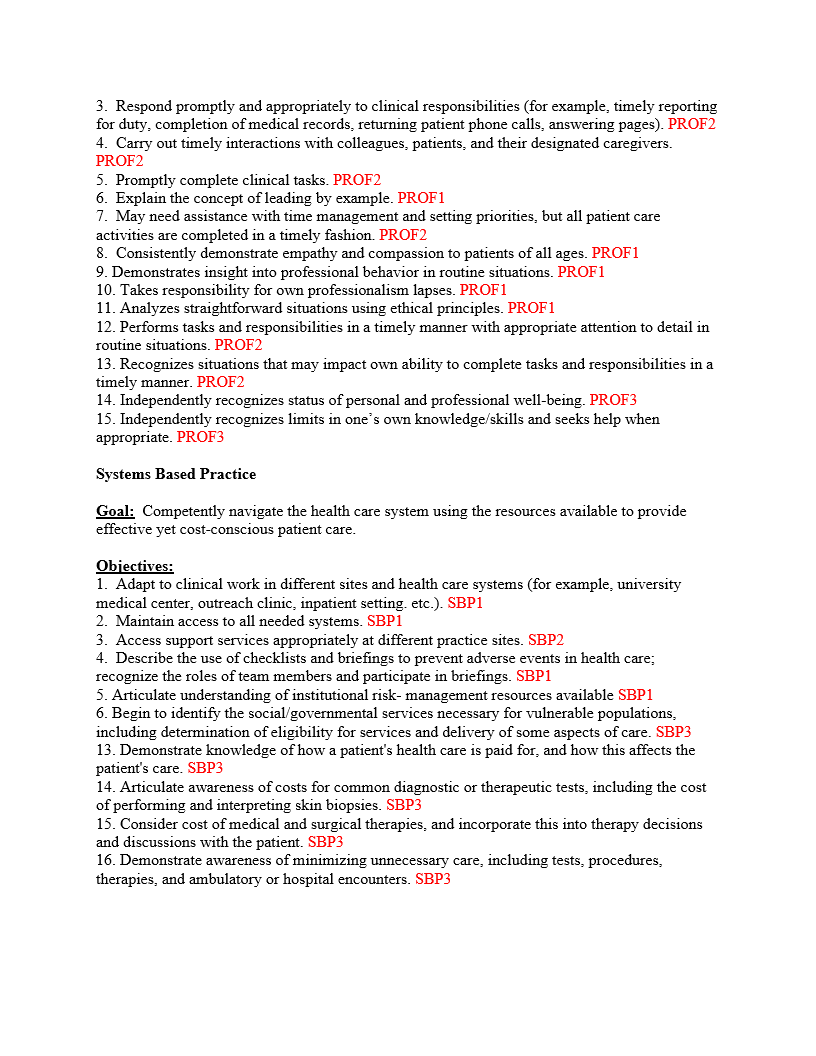
Professionalism
Goal: Develop a commitment to excellence, integrity, and sensitivity in the care for pediatric
patients and in the interactions with other health professionals and staff.
Objectives:
- Treat all patients with respect and dignity, regardless of socio- economic, racial, or ethnic
background or sexual orientation. PROF1 - Understand the actions and relationships that constitute potential boundary crossings and
violations, and actively avoid these. PROF1
Page 4
3. Respond promptly and appropriately to clinical responsibilities (for example, timely reporting
for duty, completion of medical records, returning patient phone calls, answering pages). PROF2
4. Carry out timely interactions with colleagues, patients, and their designated caregivers.
PROF2
5. Promptly complete clinical tasks. PROF2
6. Explain the concept of leading by example. PROF1
7. May need assistance with time management and setting priorities, but all patient care
activities are completed in a timely fashion. PROF2
8. Consistently demonstrate empathy and compassion to patients of all ages. PROF1
9. Demonstrates insight into professional behavior in routine situations. PROF1
10. Takes responsibility for own professionalism lapses. PROF1
11. Analyzes straightforward situations using ethical principles. PROF1
12. Performs tasks and responsibilities in a timely manner with appropriate attention to detail in
routine situations. PROF2
13. Recognizes situations that may impact own ability to complete tasks and responsibilities in a
timely manner. PROF2
14. Independently recognizes status of personal and professional well-being. PROF3
15. Independently recognizes limits in one’s own knowledge/skills and seeks help when
appropriate. PROF3
Systems Based Practice
Goal: Competently navigate the health care system using the resources available to provide
effective yet cost-conscious patient care.
Objectives:
- Adapt to clinical work in different sites and health care systems (for example, university
medical center, outreach clinic, inpatient setting. etc.). SBP1 - Maintain access to all needed systems. SBP1
- Access support services appropriately at different practice sites. SBP2
- Describe the use of checklists and briefings to prevent adverse events in health care;
recognize the roles of team members and participate in briefings. SBP1 - Articulate understanding of institutional risk- management resources available SBP1
- Begin to identify the social/governmental services necessary for vulnerable populations,
including determination of eligibility for services and delivery of some aspects of care. SBP3 - Demonstrate knowledge of how a patient’s health care is paid for, and how this affects the
patient’s care. SBP3 - Articulate awareness of costs for common diagnostic or therapeutic tests, including the cost
of performing and interpreting skin biopsies. SBP3 - Consider cost of medical and surgical therapies, and incorporate this into therapy decisions
and discussions with the patient. SBP3 - Demonstrate awareness of minimizing unnecessary care, including tests, procedures,
therapies, and ambulatory or hospital encounters. SBP3